KINH KIM CANG GƯƠM BÁU CẮT
ĐỨT PHIỀN NÃO
Ht Nhất Hạnh Dịch Nghĩa
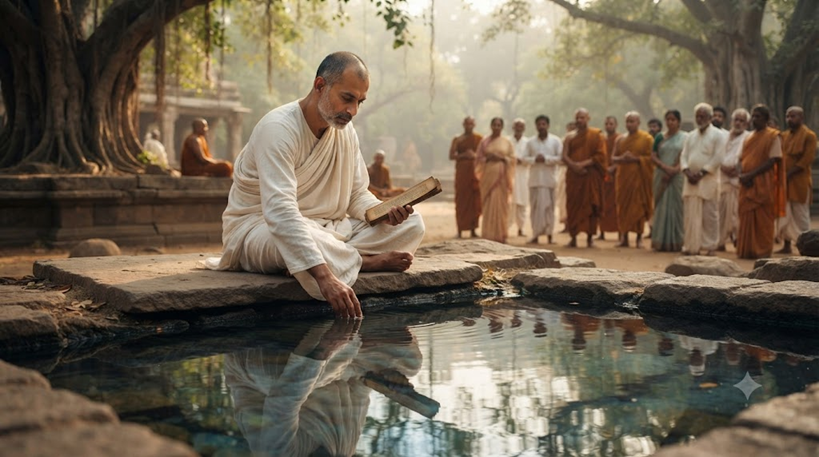
Đây là những điều tôi được nghe hồi Bụt còn ở tại tu viện Kỳ Thọ Cấp Cô Độc gần thành Xá Vệ, với đại chúng khất sĩ gồm một ngàn hai trăm năm mươi vị. Hôm ấy vào giờ khất thực, Bụt mặc áo và ôm bát đi vào thành Xá Vệ. Trong thành, Người theo phép tuần tự ghé từng nhà để khất thực. Khất thực xong, Người về lại tu viện thọ trai. Thọ trai xong, Người xếp y bát, rửa chân, trải tọa cụ mà ngồi.
Lúc ấy, từ chỗ ngồi của mình trong đại chúng, thượng tọa Tu Bồ Đề đứng dậy, trịch vai áo bên phải ra, quỳ chân trái xuống, chấp tay cung kính bạch với Bụt rằng: “Thế Tôn, Người thật là bậc hiếm có! Thế Tôn thường đặc biệt hộ niệm và giao phó sự nghiệp cho các vị Bồ Tát. Thế Tôn, những người con trai hiền và những người con gái hiền nào muốn phát tâm vô thượng chánh đẳng chánh giác thì nên nương tựa vào đâu và làm sao mà điều phục tâm mình?”
Bụt bảo: “Hay lắm, thầy Tu Bồ Đề! Thầy nói thật đúng, Như Lai thường đặc biệt hộ niệm và giao phó sự nghiệp cho các vị Bồ Tát. Này, thầy hãy lắng nghe cho kỹ, Như Lai sẽ vì thầy mà trả lời. Những người con trai hiền hay những người con gái hiền nào muốn phát tâm vô thượng chánh đẳng chánh giác thì phải nương tựa và phải điều phục tâm của họ như thế này.”
Thầy Tu Bồ Đề nói: “Bạch Thế Tôn, chúng con rất mong được nghe Người chỉ dạy.”
Bụt bảo Tu Bồ Đề: “Các bậc Bồ Tát đại nhân nên hàng phục tâm mình như sau: Có cả thảy bao nhiêu loại chúng sanh, hoặc sinh từ trứng, hoặc sinh từ thai, hoặc sinh từ sự ẩm ướt, hoặc từ sự biến hóa, hoặc có hình sắc, hoặc không có hình sắc, hoặc có tri giác, hoặc không có tri giác, hoặc không phải có tri giác cũng không phải không có tri giác, ta đều phải đưa tất cả các loài ấy vào Niết Bàn tuyệt đối để tất cả đều được giải thoát. Giải thoát cho vô số, vô lượng, vô biên chúng sanh như thế, mà kỳ thực ta không thấy có chúng sanh nào được giải thoát. Vì sao? Này Tu Bồ Đề, nếu một vị Bồ Tát mà còn có khái niệm về Ngã, về Nhân, về Chúng Sanh và về Thọ Giả thì vị ấy chưa phải là một vị Bồ Tát đích thực.
Này nữa, thầy Tu Bồ Đề, vị Bồ Tát thực hiện phép bố thí nhưng không dựa vào bất cứ một thứ gì, nghĩa là không dựa vào sắc để bố thí, cũng không dựa vào thanh, hương, vị, xúc và pháp để bố thí. Tu Bồ Đề, Bồ Tát nên bố thí theo tinh thần ấy, không dựa vào tướng. Tại sao? Nếu Bồ Tát bố thí mà không dựa vào tướng thì phước đức sẽ không thể nghĩ bàn. Tu Bồ Đề, thầy nghĩ sao? Không gian về phía Đông có thể nghĩ và lường được không?”
Bạch đức Thế Tôn, không.
Này thầy Tu Bồ Đề, không gian về phía Tây, phương Nam, phương Bắc, phương Trên và phương Dưới có thể nghĩ và lường được hay không?
Bạch đức Thế Tôn, không.
Này thầy Tu Bồ Đề, nếu Bồ Tát không nương vào đâu cả để thực hiện phép bố thí thì phước đức cũng nhiều như hư không vậy, không thể nghĩ được, không thể lường được. Này Tu Bồ Đề, các vị Bồ Tát nên trú tâm theo những lời chỉ dẫn vừa đưa ra.
Tu Bồ Đề, thầy nghĩ sao? Có thể nhận diện Như Lai qua thân tướng hay không?
Bạch đức Thế Tôn, không. Cái mà Như Lai nói là thân tướng vốn không phải là thân tướng.
Bụt bảo thầy Tu Bồ Đề: “Nơi nào có tướng là nơi đó còn có sự lường gạt. Nếu thấy được tính cách không tướng của các tướng tức là thấy được Như Lai.”
Thầy Tu Bồ Đề thưa với Bụt rằng: “Bạch đức Thế Tôn, trong tương lai, khi nghe những câu nói như thế người ta có thể phát sinh được lòng tin chân thật hay không?”
Bụt bảo: “Thầy đừng nói vậy. Năm trăm năm sau khi Như Lai diệt độ, vẫn sẽ có những người biết giữ giới và tu phước, và những người ấy khi nghe được những lời như trên cũng sẽ có thể phát sinh lòng tin và nhận ra đó là sự thật. Ta nên biết rằng những người ấy đã gieo trồng những hạt giống tốt không phải ở nơi một vị Bụt, hai vị Bụt, ba, bốn, năm vị Bụt mà thật sự đã gieo trồng những hạt giống lành ở nơi vô lượng ngàn muôn vị Bụt. Người nào chỉ trong một giây phút thôi, phát sinh được niềm tin thanh tịnh khi nghe những lời và những câu ấy, thì Như Lai tất nhiên BIẾT được người ấy, THẤY được người ấy và người ấy sẽ đạt được vô lượng phước đức như thế. Vì sao? Vì những người như thế không còn kẹt vào những khái niệm về Ngã, về Nhân, về Chúng Sanh, về Thọ Giả, về Pháp, về Không Phải Pháp, về Tướng và về Không Phải Tướng. Vì sao? Nếu còn chấp vào ý niệm Pháp thì vẫn còn kẹt vào các tướng Ngã, Nhân, Chúng Sanh và Thọ Giảa và nếu còn chấp vào ý niệm Không Phải Pháp, thì cũng vẫn còn kẹt vào tướng Ngã, Nhân, Chúng Sanh và Thọ Giả như thường. Thế cho nên, đã không nên chấp vào Pháp mà cũng không nên chấp vào Không Phải Pháp. Vì vậy mà Như Lai đã mật ý nói: Này các vị khất sĩ, nên biết rằng Pháp tôi nói được ví như chiếc bè, Pháp còn nên bỏ, huống là Không Phải Pháp.”
Thầy Tu Bồ Đề, thầy nghĩ sao, Như Lai có đắc pháp vô thượng chánh đẳng chánh giác không? Như Lai có pháp gì để tuyên thuyết hay không?
Thầy Tu Bồ Đề thưa: “Theo con hiểu điều Bụt dạy thì chẳng có một pháp gì riêng biệt được gọi là vô thượng chánh đẳng chánh giác, cũng không có một pháp nào riêng biệt được Như Lai tuyên thuyết. Vì sao? Vì những pháp mà Như Lai đã chứng và đã nói thì không thể nắm bắt được, cũng không thể diễn tả được. Đó không phải là pháp cũng không phải là không pháp. Vì sao? Vì tất cả các bậc hiền thánh đều do pháp vô vi mà trở nên khác người.”
Thầy Tu Bồ Đề, thầy nghĩ sao? Nếu có người đem bảy thứ châu báu nhiều cho đến nỗi chứa đầy cả thế giới tam thiên đại thiên này để bố thí, thì người ấy có phước đức nhiều hay không?
Tu Bồ Đề thưa: “Bạch Thế Tôn, rất nhiều. Vì sao? Bạch đức Thế Tôn, vì phước đức ấy trong tự thân chẳng phải là phước đức nên Như Lai mới nói là phước đức nhiều.”
Nếu có người tiếp nhận và hành trì kinh này dù chỉ một bài kệ bốn câu trong kinh thôi rồi đem giảng nói cho người khác nghe thì phước đức của người này còn lớn hơn phước đức của người kia. Tại sao? Này Tu Bồ Đề, tất cả các đức Bụt và pháp Vô Thượng Chánh Đẳng Chánh Giác của các đức Bụt, đều xuất phát từ kinh này. Này Tu Bồ Đề, cái gọi là pháp Bụt, cái đó chính là cái không phải pháp Bụt.
Tu Bồ Đề, thầy nghĩ sao? Một vị Tu Đà Hoàn có nghĩ rằng: ‘Ta đã đắc quả Tu Đà Hoàn’ không?
Tu Bồ Đề thưa: “Bạch Thế Tôn, không. Vì sao? Tu Đà Hoàn có nghĩa là đi vào dòng mà thật ra không có dòng nào để đi vào cả. Không đi vào dòng sắc, cũng không đi vào dòng thanh, hương, vị, xúc và pháp. Vì vậy cho nên gọi là “đi vào dòng”.
Tu Bồ Đề, thầy nghĩ sao? Một vị Tư Đà Hàm có nghĩ rằng: ‘Ta đã đắc quả Tư Đà Hàm’ không?
Tu Bồ Đề thưa: “Bạch đức Thế Tôn, không. Vì sao? Tư Đà Hàm có nghĩa là một đi một trở lại mà thật ra không có sự đi cũng không có sự trở lại. Vì vậy cho nên gọi là Tư Đà Hàm.”
Tu Bồ Đề, thầy nghĩ sao? Một vị A Na Hàm có nghĩ rằng: ‘Ta đã đắc quả A Na Hàm’ không?
Tu Bồ Đề thưa: “Bạch Thế Tôn, không. Vì sao? A Na Hàm có nghĩa là không trở lại. Mà thật ra làm gì có sự không trở lại? Vì vậy cho nên gọi là A Na Hàm.”
Tu Bồ Đề, thầy nghĩ sao? Một vị A La Hán có thể nghĩ rằng: ‘Ta đã đắc quả A La Hán’ không?
Tu Bồ Đề thưa: “Bạch đức Thế Tôn, không. Vì sao? Thật ra không có pháp nào riêng biệt được gọi là A La Hán. Bạch Thế Tôn, nếu một vị A La Hán nào khởi niệm rằng ‘ta đã đắc quả A La Hán’ thì vị đó còn chấp vào Ngã, Nhân, Chúng Sanh và Thọ Giả. Bạch đức Thế Tôn, Thế Tôn thường nói con đã đạt tới Vô Tránh Tam Muội và trong Tăng Thân, con là vị A La Hán ly dục đệ nhất. Thế Tôn, nếu con nghĩ rằng con đã đắc quả A La Hán thì chắc Thế Tôn đã không nói rằng Tu Bồ Đề là người ưa hạnh A Lan Na.”
Bụt hỏi thầy Tu Bồ Đề: “Thuở xưa lúc còn theo học với Bụt Nhiên Đăng, Như Lai có đắc pháp gì chăng?”
Bạch đức Thế Tôn, không. Ngày xưa khi còn ở với Bụt Nhiên Đăng, Như Lai không có đắc pháp gì cả.
Tu Bồ Đề, thầy nghĩ sao? Bồ Tát có trang nghiêm cõi Bụt chăng?
Bạch Thế Tôn, không. Vì sao? Trang nghiêm cõi Bụt tức là không trang nghiêm cõi Bụt, vì vậy nên mới gọi là trang nghiêm cõi Bụt.
Như thế đó, thầy Tu Bồ Đề, các vị Bồ Tát và đại nhân nên phát tâm thanh tịnh theo tinh thần ấy. Không nên dựa vào sắc mà phát tâm, cũng không nên dựa vào thanh, hương, vị, xúc và pháp mà phát tâm. Chỉ nên phát tâm trong tinh thần vô trụ.
Này thầy Tu Bồ Đề, ví dụ có người có thân lớn như núi chúa Tu Di, thầy nghĩ sao? Thân ấy có lớn không?
Tu Bồ Đề thưa: “Bạch đức Thế Tôn, lớn lắm. Vì sao? Cái mà Thế Tôn gọi là không phải thân lớn mới đích thật là thân lớn.”
Thầy Tu Bồ Đề, ví dụ trong sông Hằng có bao nhiêu hạt cát là có bấy nhiêu dòng sông Hằng. Vậy thì cát của tất cả các sông Hằng ấy có nhiều không?
Tu Bồ Đề thưa: “Bạch Thế Tôn, rất nhiều. Số lượng các sông Hằng đã là vĩ đại, huống là số lượng những hạt cát của các sông Hằng ấy.”
Này Tu Bồ Đề, bây giờ tôi muốn hỏi thật thầy rằng, nếu có người con trai hay người con gái nhà lành nào đem châu báu chất đầy cả thế giới tam thiên đại thiên nhiều như cát của tất cả các sông Hằng kia mà bố thí thì phước đức có nhiều không?
Tu Bồ Đề thưa: “Bạch Thế Tôn, rất nhiều.”
Bụt bảo thầy Tu Bồ Đề: “Nếu người con trai hay người con gái nhà lành nào mà thọ trì kinh này dù chỉ một bài kệ bốn câu thôi và đem ra chia sẻ với người khác thì phước đức của người này còn nhiều hơn phước đức của người trước.
Còn nữa, thầy Tu Bồ Đề, mảnh đất nào mà nơi đó có người thuyết kinh này, dù chỉ là thuyết một bài kệ bốn câu thôi, thì nên biết rằng mảnh đất ấy là nơi mà tất cả các giới Thiên, Nhân và A Tu La đều phải hướng về cúng dường như là cúng dường tháp miếu của Bụt. Một mảnh đất mà còn như thế, huống gì là bản thân người đứng ra hành trì và đọc tụng. Tu Bồ Đề ơi, thầy nên biết rằng, một con người như thế đã thành tựu được chuyện hiếm có tối thượng. Nơi nào mà có kinh này là nơi đó có mặt của bậc đạo sư, hoặc một vị đệ tử lớn của người.”
Lúc ấy thầy Tu Bồ Đề thưa với Bụt rằng: “Bạch Thế Tôn, nên đặt tên Kinh này là Kinh gì và chúng con nên phụng trì Kinh này như thế nào?”
Bụt bảo thầy Tu Bồ Đề: “Nên gọi Kinh này là Kinh Kim Cương Có Năng Lực Chặt Đứt Phiền Não Và Đưa Sang Bờ Giải Thoát (Năng Đoạn Kim Cương Bát Nhã Ba La Mật Kinh). Hãy dùng danh từ ấy mà phụng trì Kinh này. Vì sao? Cái mà Như Lai gọi là Bát Nhã Ba La Mật vốn không phải là Bát Nhã Ba La Mật cho nên mới thật sự là Bát Nhã Ba La Mật.”
Bụt hỏi: “Tu Bồ Đề, thầy nghĩ sao? Như Lai có pháp để nói không?”
Tu Bồ Đề thưa: “Bạch Thế Tôn, Như Lai chẳng có gì để nói cả.”
Tu Bồ Đề, thầy nghĩ sao? Cát bụi do tam thiên đại thiên thế giới nghiền ra có nhiều không?
Nhiều lắm, bạch Thế Tôn.
Này Tu Bồ Đề, những cát bụi ấy Như Lai gọi không phải là cát bụi cho nên mới thực sự là cát bụi. Cái mà Như Lai gọi là thế giới tức không phải là thế giới cho nên được gọi là thế giới. Tu Bồ Đề, thầy nghĩ sao? Có thể nhận diện Như Lai qua ba mươi hai tướng không?
Bạch đức Thế Tôn, không. Vì sao? Vì cái mà Như Lai gọi là ba mươi hai tướng đều không phải là tướng, vì vậy cho nên Như Lai mới gọi là ba mươi hai tướng.
Tu Bồ Đề, nếu có một người con trai hay một người con gái nhà lành nào đem thân mạng nhiều như số cát sông Hằng mà thực hiện việc bố thí, và nếu có một người con trai hay một người con gái nhà lành khác biết thọ trì và đem kinh này ra giảng cho kẻ khác, dù chỉ thọ trì và giảng dạy bốn câu thôi, thì phước đức của người này cũng nhiều hơn phước đức của người trước.
Nghe kinh này tới đây, thấm được nghĩa lý thâm sâu, thầy Tu Bồ Đề cảm động khóc rơi nước mắt. Thầy thưa: “Bạch Thế Tôn, Thế Tôn thật là hiếm có, từ ngày theo Thế Tôn đạt được tuệ nhãn cho đến giờ, con chưa bao giờ được nghe kinh điển thâm diệu như hôm nay. Thế Tôn, nếu có người nghe được kinh này mà có lòng tin thanh tịnh và đạt được cái thấy chân thật thì nên biết người ấy đã thực hiện được công đức hiếm có vào bậc nhất. Thế Tôn, ngày nay con nghe được kinh điển mầu nhiệm như thế này, được tin, hiểu, tiếp nhận và hành trì kinh này cũng chưa phải là chuyện khó có lắm, nhưng trong tương lai, khoảng năm trăm năm về sau mà có người được nghe kinh này lại có thể tin, hiểu, tiếp nhận và hành trì thì chắc chắn sự có mặt của kẻ ấy là một sự hiếm có vào bậc nhất. Vì sao vậy? Vì những kẻ ấy sẽ không bị khống chế bởi khái niệm về Ngã, Nhân, Chúng Sanh và Thọ Giả. Tại vì sao? Khái niệm về Ngã tức không phải là khái niệm, khái niệm về Nhân, về Chúng Sanh và về Thọ Giả cũng không phải là những khái niệm. Vì sao? Vì thoát khỏi sự khống chế của các khái niệm cho nên có các vị Bụt.”
Bụt bảo thầy Tu Bồ Đề: “Đúng thế, đúng thế. Nếu có người được nghe kinh này mà không hoảng, không sợ thì nên biết rằng những người như vậy rất là hiếm có. Tại sao? Này thầy Tu Bồ Đề ơi, cái mà Như Lai gọi là đệ nhất Ba La Mật vốn không phải là đệ nhất Ba La Mật cho nên mới được gọi là đệ nhất Ba La Mật.
Tu Bồ Đề, cái gọi là Nhẫn Nhục Ba La Mật, Như Lai nói không phải là Nhẫn Nhục Ba La Mật nên mới được gọi là Nhẫn Nhục Ba La Mật. Tại sao? Tu Bồ Đề này, trong một tiền kiếp xa xưa, khi bị vua Kalinga cắt đứt thân thể, ta đã không bị kẹt vào khái niệm về Ngã, không bị kẹt vào khái niệm về Nhân, về Chúng Sanh và về Thọ Giả. Vì nếu khi đó ta bị kẹt vào những khái niệm ấy thì ta đã sinh tâm oán hận Kalinga (Ca Lợi Vương) mất rồi.
Lại nhớ đến thuở xưa khi ta còn tu tiên theo hạnh nhẫn nhục, trong suốt năm trăm kiếp, ta đã tu tập để không bị kẹt vào các khái niệm Ngã, Nhân, Chúng Sanh và Thọ Giả. Vậy nên thầy Tu Bồ Đề ơi, Bồ Tát khi phát tâm bồ đề vô thượng thì nên buông bỏ tất cả các khái niệm, không nên dựa vào sắc mà phát tâm, không nên dựa vào thanh, hương, vị, xúc và pháp mà phát tâm, chỉ nên phát tâm vô trụ.
Như Lai đã nói tất cả các khái niệm đều không phải là khái niệm và tất cả các loài chúng sanh đều không phải là chúng sanh. Tu Bồ Đề, Như Lai là kẻ nói lời chính xác, là kẻ nói lời đúng với sự thật, là kẻ nói lời phù hợp với thực tại, là kẻ nói lời không dối trá, là kẻ chỉ nói một lời. Tu Bồ Đề, nếu có pháp mà Như Lai đã đắc thì pháp ấy không phải thật cũng không phải hư.
Tu Bồ Đề, nếu Bồ Tát còn dựa vào pháp mà thực hiện bố thí thì cũng như đi vào trong bóng tối, chẳng thấy được gì. Trái lại, nếu Bồ Tát không dựa vào pháp mà bố thí thì cũng như người có mắt đi trong ánh mặt trời, có thể thấy được mọi hình và mọi sắc.
Tu Bồ Đề, trong tương lai nếu có một người con trai hay một người con gái nhà lành nào mà có khả năng tiếp nhận, đọc tụng và hành trì kinh này thì người ấy sẽ được Như Lai nhìn thấy với con mắt trí tuệ của Người. Như Lai sẽ BIẾT người ấy, sẽ THẤY người ấy và người ấy sẽ thực hiện được công đức vô lượng vô biên.
Này thầy Tu Bồ Đề, nếu có một người con trai hay một người con gái nhà lành nào buổi sáng đem thân mạng mình ra nhiều như số cát sông Hằng mà bố thí, buổi trưa và buổi chiều cũng vậy, trong thời gian trăm ngàn vạn ức vô lượng kiếp, và nếu có một kẻ khác tuy không làm như thế, nhưng khi nghe đến kinh này thì đem lòng tin tưởng, không phản kháng lại thì phước đức còn nhiều hơn phước đức của người kia. Nghe mà đem lòng tin còn có phước đức lớn như vậy, huống hồ là biên chép, hành trì, đọc tụng và giải thích cho kẻ khác được nghe. Tu Bồ Đề, nói tóm lại thì kinh này có công đức vô biên, không thể nghĩ cho cùng, không thể nói cho hết cũng không thể đo lường. Nếu có người nào có khả năng thọ trì, đọc tụng và phổ biến cho người khác biết thì kẻ ấy sẽ được Như Lai thấy tới, biết tới và người ấy sẽ thực hiện được công đức không thể nghĩ cho cùng, không thể nói cho hết, không có biên giới, không có đo lường, không thể so sánh. Người như thế có thể gánh vác sự nghiệp vô thượng chánh đẳng chánh giác của Như Lai. Tại sao? Tu Bồ Đề này, nếu chỉ ưa thích pháp nhỏ, nếu còn vướng mắc vào Ngã, Nhân, Chúng Sanh và Thọ Giả thì không có khả năng nghe, nhận, đọc tụng và giải thuyết cho kẻ khác. Tu Bồ Đề, bất cứ nơi nào có kinh này thì tất cả các giới Thiên, Nhân, A Tu La đều phải đến cúng dường, những nơi ấy đều được gọi là bảo tháp cần được cung kính, hành lễ, đi quanh và cúng dường bằng hoa và bằng hương.
Này nữa thầy Tu Bồ Đề, nếu một người con trai hoặc một người con gái nhà lành nào đọc tụng và hành trì kinh này mà bị người khác chê bai hủy báng thì người ấy sẽ tiêu trừ được các tội chướng trong các kiếp trước kể cả những tội chướng có thể đưa người kia rơi xuống các nẻo ác và sau đó sẽ thực hiện được quả vị chánh đẳng chánh giác. Tu Bồ Đề, ta nhớ vô lượng a tăng kỳ kiếp về trước, trước khi được gặp Bụt Nhiên Đăng, ta đã từng gặp tám trăm bốn vạn ức na do tha các vị Bụt. Và với vị nào ta cũng đều có cúng dường và hầu cận. Nếu vào thời Mạt thế mà có người có khả năng đọc tụng và thọ trì kinh này thì phước đức đạt được còn lớn hơn hàng trăm ngàn vạn ức lần phước đức của ta ngày trước. Dùng thí dụ về toán số cũng không thể hình dung được phước đức ấy.
Tu Bồ Đề, vào thời Mạt thế, nếu một người con trai hoặc một người con gái nhà lành nào thọ trì, đọc tụng kinh này thì công đức đạt được lớn cho đến nỗi nếu ta nói ra thì sẽ có người hồ nghi, không tin và tâm có thể trở nên cuồng loạn. Tu Bồ Đề, nên biết: nghĩa lý của kinh này không thể nghĩ cho cùng, không thể nói cho hết và hoa trái của sự thọ trì kinh này cũng không thể nghĩ cho cùng, không thể nói cho hết.”
Lúc ấy, thầy Tu Bồ Đề thưa với Bụt: “Thế Tôn, con xin phép được hỏi lại: người con trai hiền hoặc người con gái hiền nào muốn phát tâm vô thượng chánh đẳng chánh giác thì nên dựa vào đâu và nên hàng phục tâm mình như thế nào?”
Bụt bảo: “Thầy Tu Bồ Đề, người con trai hiền hoặc người con gái hiền nào muốn phát tâm vô thượng chánh đẳng chánh giác, thì nên phát tâm như thế này: ta phải đưa hết tất cả chúng sanh qua bờ giác ngộ rồi thì ta chẳng thấy có chúng sanh nào được giác ngộ cả. Vì sao thế? Này thầy Tu Bồ Đề, nếu một vị Bồ Tát mà còn vướng mắc vào các khái niệm về Ngã, Nhân, Chúng Sanh và Thọ Giả thì vị ấy chưa phải là vị Bồ Tát chân thật. Tại sao như thế?
Tu Bồ Đề, thật ra chẳng có pháp gì riêng biệt gọi là tâm vô thượng chánh đẳng chánh giác để mà phát ra cả. Tu Bồ Đề, thầy nghĩ sao? Ngày xưa khi còn ở với Bụt Nhiên Đăng, Như Lai có đắc pháp gì gọi là vô thượng chánh đẳng chánh giác hay không?”
Bạch đức Thế Tôn, không. Theo cách con hiểu lời Bụt dạy thì không có pháp gì sở đắc gọi là vô thượng chánh đẳng chánh giác.
Bụt dạy: “Đúng như thế, đúng như thế! Này Tu Bồ Đề, thật ra không có pháp gì gọi là vô thượng chánh đẳng chánh giác mà Như Lai có đắc. Nếu có thì Bụt Nhiên Đăng đã không thọ ký cho ta như thế này: ‘Sau này ngươi sẽ thành Bụt hiệu là Thích Ca Mâu Ni.’ Chính vì không có pháp có thể sở đắc gọi là vô thượng chánh đẳng chánh giác cho nên Bụt Nhiên Đăng mới nói với ta như thế. Vì sao? Như Lai có nghĩa là chân như của các pháp. Nếu có người nói Như Lai đắc pháp vô thượng chánh đẳng chánh giác thì người đó lầm: chẳng có pháp vô thượng chánh đẳng chánh giác có thể đắc. Tu Bồ Đề, pháp vô thượng chánh đẳng chánh giác mà Như Lai đắc ấy, thật ra không phải thật cũng không phải hư. Cho nên Như Lai đã từng nói: tất cả các pháp đều là pháp Bụt. Cái mà ta gọi là tất cả các pháp thật ra không phải là tất cả các pháp cho nên mới gọi là tất cả các pháp. Tu Bồ Đề, cũng ví dụ như thân người cao lớn.”
Tu Bồ Đề thưa: “Cái mà Như Lai gọi là thân người cao lớn, chẳng phải là thân người cao lớn.”
Tu Bồ Đề, Bồ Tát cũng thế, nếu một vị Bồ Tát nghĩ rằng ta phải độ tất cả chúng sanh thì vị ấy chưa phải là vị Bồ Tát. Vì sao? Tu Bồ Đề này, không có pháp gì riêng biệt được gọi là Bồ Tát cả. Cho nên Bụt đã nói tất cả các pháp đều không có Ngã, không có Nhân, không có Chúng Sanh, không có Thọ Giả. Tu Bồ Đề, nếu một vị Bồ Tát nghĩ ‘ta phải trang nghiêm đất Bụt’ thì người đó chưa phải là Bồ Tát. Vì sao? Cái mà Như Lai gọi là trang nghiêm đất Bụt vốn không phải là trang nghiêm cho nên mới gọi là trang nghiêm. Tu Bồ Đề, nếu một vị Bồ Tát nào thông đạt được lý vô ngã vô pháp thì Như Lai gọi người đó là một vị Bồ Tát đích thực.
Tu Bồ Đề, thầy nghĩ sao, Như Lai có mắt thịt không?
Thầy Tu Bồ Đề nói: “Bạch Thế Tôn có, Như Lai có mắt thịt.”
Bụt hỏi: “Tu Bồ Đề, thầy nghĩ sao, Như Lai có mắt trời hay không?”
Tu Bồ Đề nói: “Bạch Thế Tôn có, Như Lai có mắt trời.”
Tu Bồ Đề, thầy nghĩ sao, Như Lai có mắt tuệ không?
Tu Bồ Đề thưa: “Bạch Thế Tôn có, Như Lai có mắt tuệ.”
Tu Bồ Đề, thầy nghĩ sao, Như Lai có mắt pháp không?
Tu Bồ Đề nói: “Bạch Thế Tôn có, Như Lai có mắt pháp.”
Bụt hỏi: “Như Lai có mắt Bụt không?”
Bạch Thế Tôn, có. Như Lai có mắt Bụt.
Tu Bồ Đề, thầy nghĩ sao? Cát trong sông Hằng, Bụt có thấy là cát không?
Tu Bồ Đề nói: “Bạch Thế Tôn, Như Lai cũng gọi cát là cát vậy.”
Tu Bồ Đề, thầy nghĩ sao, nếu mỗi hạt cát trong sông Hằng là một sông Hằng, thì số lượng thế giới Bụt nhiều như số cát trong tất cả những sông Hằng ấy có nhiều không?
Bạch Thế Tôn, rất nhiều.
Bụt bảo thầy Tu Bồ Đề: “Trong tất cả các thế giới ấy có đủ tất cả các loài chúng sinh mà tâm ý các chúng sinh ấy cũng có đủ loại. Vậy mà loại tâm ý nào trong số ấy Như Lai cũng đều biết hết. Tại sao? Tu Bồ Đề, tại vì cái mà Như Lai gọi là các loại tâm ý đều không phải là các loại tâm ý, cho nên mới gọi là các loại tâm ý. Vì sao vậy? Tu Bồ Đề, tâm quá khứ không nắm bắt được, tâm hiện tại không nắm bắt được, mà tâm vị lai cũng không nắm bắt được.
Tu Bồ Đề, thầy nghĩ sao? Nếu có người đem châu báu nhiều cho đến nỗi phải chất đầy cả thế giới tam thiên đại thiên mà bố thí thì người đó có được nhiều phước đức hay không?”
Bạch Thế Tôn, được phước đức rất nhiều.
Này thầy Tu Bồ Đề, nếu phước đó là phước đức thật thì Như Lai đã không nói là người ấy đạt được nhiều phước đức. Chính vì phước đức ấy vốn không có thực thể cho nên Như Lai mới nói người ấy đạt được phước đức nhiều. Tu Bồ Đề, thầy nghĩ sao? Có thể nhận diện Như Lai qua sắc thân đầy đủ không?
Bạch không, cái mà Như Lai gọi là sắc thân đầy đủ thì không phải là sắc thân đầy đủ cho nên mới gọi là sắc thân đầy đủ.
Tu Bồ Đề, thầy nghĩ sao? Có thể nhận diện Như Lai qua tướng mạo đầy đủ không?
Thưa Thế Tôn, không. Không thể nhận diện Như Lai qua tướng mạo đầy đủ. Vì sao? Cái mà Như Lai gọi là tướng mạo đầy đủ thì không phải là tướng mạo đầy đủ cho nên mới gọi là tướng mạo đầy đủ.
Tu Bồ Đề, thầy đừng bảo rằng Như Lai có ý niệm: ta sẽ thuyết pháp. Đừng nghĩ như thế. Vì sao? Nếu có người nghĩ rằng Như Lai có pháp để nói tức là người đó phỉ báng Bụt vì lẽ người đó không hiểu điều ta nói. Tu Bồ Đề, thuyết pháp có nghĩa là không có pháp nào được nói, như vậy gọi là thuyết pháp.
Lúc đó huệ mạng Tu Bồ Đề bạch với Bụt rằng: “Thế Tôn, đời sau khi được nghe pháp này chúng sanh có thể phát sanh lòng tin hay không?”
Bụt dạy: “Tu Bồ Đề, những chúng sanh đó không phải là chúng sanh mà cũng không phải là không chúng sanh. Vì sao thế? Tu Bồ Đề, cái mà Như Lai gọi là không phải chúng sanh mới thực sự được gọi là chúng sanh.”
Tu Bồ Đề bạch Bụt: “Thế Tôn, pháp vô thượng chánh đẳng chánh giác mà Bụt đắc có phải là cái vô sở đắc?”
Bụt nói: “Đúng thế, Tu Bồ Đề, đối với vô thượng chánh đẳng chánh giác ta chẳng có một chút xíu nào pháp sở đắc, cho nên mới gọi nó là vô thượng chánh đẳng chánh giác.
Này nữa, thầy Tu Bồ Đề! Pháp ấy bình đẳng, không có cao thấp nên gọi là vô thượng chánh đẳng chánh giác. Tu tập tất cả các thiện pháp theo tinh thần vô ngã, vô nhân, vô chúng sanh, vô thọ giả thì đạt được quả vô thượng chánh đẳng chánh giác. Tu Bồ Đề, cái gọi là thiện pháp thì Như Lai bảo không phải là thiện pháp, cho nên đó mới thật là thiện pháp.
Tu Bồ Đề, giá dụ có người tom góp bảy thứ châu báu chứa đầy từng đống cao như tất cả các núi Tu Di trong thế giới tam thiên đại thiên này để mà bố thí thì công đức của những người ấy đem so với công đức của những người đọc, tụng và thọ trì Kinh Kim Cương Năng Đoạn này rồi đem ra giảng nói cho người khác nghe thì trăm phần không được một, trăm ngàn vạn ức phần không được một. Phước đức của người hành trì kinh, dù chỉ là hành trì một bài kệ bốn câu, cũng không thể nào dùng ví dụ hay toán học để mà diễn tả nổi.
Tu Bồ Đề, các vị đừng có bảo rằng Như Lai có ý niệm ‘ta sẽ độ chúng sanh’. Tu Bồ Đề, đừng nghĩ như thế. Tại sao vậy? Sự thật thì không có chúng sanh nào để cho Như Lai độ. Nếu Như Lai nghĩ là có thì Như Lai đã vướng vào khái niệm Ngã, khái niệm Nhân, khái niệm Chúng Sanh và khái niệm Thọ Giả rồi. Tu Bồ Đề, cái mà Như Lai nói là có ngã vốn không phải là có ngã mà người phàm phu lại cho là có ngã. Này Tu Bồ Đề, kẻ phàm phu đó, Như Lai không cho đó là phàm phu cho nên mới gọi họ là phàm phu.
Tu Bồ Đề, thầy nghĩ sao? Có nên quán tưởng Như Lai qua ba mươi hai tướng không?”
Tu Bồ Đề nói: “Thưa vâng, thưa vâng, phải dùng ba mươi hai tướng mà quán Như Lai.”
Bụt nói: “Nếu nói lấy ba mươi hai tướng mà quán Như Lai thì một vị Chuyển Luân Thánh Vương cũng là Như Lai sao?”
Tu Bồ Đề nói: “Thế Tôn, con hiểu lời Bụt dạy rồi, không nên dùng ba mươi hai tướng mà quán Như Lai.”
Lúc bấy giờ Thế Tôn nói lên bài kệ này:
Tìm ta qua hình sắc
Cầu ta qua âm thanh
Là kẻ hành tà đạo
Không thể thấy Như Lai.
Tu Bồ Đề, thầy đừng nghĩ rằng Như Lai đạt tới vô thượng chánh đẳng chánh giác mà không cần tới các tướng một cách đầy đủ. Tu Bồ Đề, đừng nghĩ như thế. Tu Bồ Đề! Thầy đừng nghĩ là khi phát tâm vô thượng chánh đẳng chánh giác ta phải coi các pháp là hư vô, đoạn diệt. Đừng nghĩ như thế. Kẻ phát tâm vô thượng chánh đẳng chánh giác không chủ trương rằng các pháp là hư vô hay đoạn diệt.
Tu Bồ Đề, nếu có một vị Bồ Tát đem bảy thứ châu báu nhiều cho đến nỗi chất đầy cả các thế giới nhiều như cát sông Hằng mà bố thí thì công đức ấy cũng không lớn bằng công đức của một người đã hiểu được rằng tất cả các pháp đều là vô ngã và chấp nhận được sự thật đó một cách hoan hỷ. Vì sao? Tu Bồ Đề! Vì Bồ Tát không cần phải tom góp phước đức.
Tu Bồ Đề bạch Bụt: “Thế Tôn, Bồ Tát không cần tom góp phước đức nghĩa là sao?”
Tu Bồ Đề, Bồ Tát tạo phước đức mà không vướng mắc vào ý niệm tạo phước đức cho nên ta mới nói là Bồ Tát không cần tom góp phước đức.
Tu Bồ Đề, nếu có kẻ nói: ‘Thế Tôn có tới, có đi, có ngồi, có nằm’ kẻ ấy không hiểu được điều ta nói. Tại sao? Như Lai có nghĩa là không từ đâu tới cả và cũng không đi về đâu cả, cho nên gọi là Như Lai.
Tu Bồ Đề, nếu có một người con trai hay một người con gái nhà lành nào đem thế giới tam thiên đại thiên nghiền thành bụi nhỏ thì thầy nghĩ sao? Bụi nhỏ như thế có nhiều không?
Tu Bồ Đề nói: “Bạch Thế Tôn, rất nhiều. Vì sao? Nếu bụi nhỏ mà có thật thì Bụt đã không gọi chúng là bụi nhỏ. Vì sao? Cái mà Bụt gọi là bụi nhỏ vốn không phải là bụi nhỏ cho nên mới là bụi nhỏ. Thế Tôn! Cái mà Như Lai gọi là thế giới tam thiên đại thiên, nó không phải là thế giới cho nên mới gọi nó là thế giới. Vì sao? Nếu thế giới mà có thật thì đó là một hợp tướng. Cái mà Như Lai gọi là một hợp tướng vốn không phải là một hợp tướng cho nên gọi là một hợp tướng.”
Tu Bồ Đề! Cái gọi là một hợp tướng chỉ là một ước lệ ngôn ngữ không có thực chất. Chỉ có kẻ phàm phu mới bị vướng mắc vào đó mà thôi.
Tu Bồ Đề, nếu có kẻ bảo Bụt có nói về ngã kiến, nhân kiến, chúng sanh kiến và thọ giả kiến, kẻ ấy có hiểu được ý ta không?
Thưa không, Thế Tôn. Kẻ ấy không hiểu được ý Như Lai. Vì sao? Cái mà Như Lai gọi là ngã kiến, nhân kiến, chúng sanh kiến và thọ giả kiến vốn không phải là ngã kiến, nhân kiến, chúng sanh kiến và thọ giả kiến, cho nên mới là ngã kiến, nhân kiến, chúng sanh kiến và thọ giả kiến.
Tu Bồ Đề! Kẻ phát tâm vô thượng chánh đẳng chánh giác phải biết như thế về tất cả các pháp, phải thấy như thế về tất cả các pháp, phải tin hiểu như thế về tất cả các pháp mà không nên có khái niệm về pháp. Tu Bồ Đề! Cái gọi là khái niệm về pháp Như Lai nói không phải là khái niệm về pháp, cho nên mới gọi là khái niệm về pháp.
Tu Bồ Đề, nếu có người đem bảy thứ châu báu số lượng lớn đến nỗi chứa đầy các thế giới nhiều tới vô lượng a tăng kỳ để bố thí thì phước đức cũng không bằng phước đức của một người con trai hay một người con gái nhà lành khi người này phát tâm bồ đề, đọc tụng thọ trì kinh này và đem giải thuyết cho người khác nghe, dù chỉ là một bài kệ bốn câu trong ấy. Giải thuyết theo tinh thần nào? Giải thuyết mà không kẹt vào tướng, như như và không động chuyển. Vì sao thế?
Tất cả pháp hữu vi
Như mộng huyễn bào ảnh
Như sương như chớp loè
Hãy quán chiếu như thế.
Sau khi nghe Bụt nói Kinh này, thượng tọa Tu Bồ Đề và các vị khất sĩ, nữ khất sĩ, Ưu bà tắc, Ưu bà di và tất cả các giới Trời, Người và A tu la đều rất hoan hỷ, tin tưởng và tiếp nhận để thực hành. (CCC)
THE DIAMOND SUTRA
In Sanskrit and English
Translated from the Sanskrit by Edward Conze
Om namo Bhagavatyai Arya-Prajnaparamitayai!
Homage to the Perfection of Wisdom, the Lovely, the Holy!
Evam maya srutam ekasmin samaye. Bhagavan Sravastyam viharati sma Jetavane’nathapindadasya-arame mahata bhiksu-samghena sarddham ardhatrayodasabhir bhiksu-sataih sambahulais ca bodhisattvair mahasattvaih. Atha khalu Bhagavan purvahna- kala-samaye nivasya patracivaram adaya Sravastim maha-nagarim pindaya praviksat. Atha khalu Bhagavan Sravastim maha-nagarim pindaya caritva krta-bhakta-krtyah pascadbhakta- pindapata-pratikrantah patra-civaram pratisamya padau praksalya nyasidat prajnapta eva- asane paryankam abhujya rjum kayam pranidhaya, pratimukhim smrtim upasthapya. Atha khalu sambahula bhiksavo yena Bhagavams tenopasamkraman upasamkramya Bhagavatah padau sirobhir abhivandya Bhagavantam trispradaksinikrtyaikante nyasidan.
Thus have I heard at one time. The Lord dwelt at Sravasti, in the Jeta Grove, in the garden of Anathapindika, together with a large gathering of monks, consisting of 1,250 monks, and with many Bodhisattvas, great beings. Early in the morning the Lord dressed, put on his cloak, took his bowl, and entered the great city of Sravasti to collect alms. When he had eaten and returned from his round, the Lord put away his bowl and cloak, washed his feet, and sat down on the seat arranged for him, crossing his legs, holding his body upright, and mindfully fixing his attention in front of him. Then many monks approached to where the Lord was, saluted his feet with their heads, thrice walked round him to the right, and sat down on one side.
Tena khalu punah samayena-ayusman Subhutis tasyam eva parsadi samnipatito’bhut samnisannah. Atha khalv ayusman Subhutir utthaya-asanad, ekamsam uttarasangham krtva, daksinam janu-mandalam prthivyam pratisthapya, yena Bhagavams tena-anjalim pranamya Bhagavantam etad avocat: Ascaryam Bhagavan parama-ascaryam Sugata, yavad eva Tathagatena-arhata samyaksambuddhena bodhisattva mahasattva anuparigrhitah paramena- anugrahena. Ascaryam Bhagavan yavad eva Tathagatena-arhata samyaksambuddhena bodhisattva mahasattvah parinditah paramaya parindanaya. Tat katham Bhagavan bodhisattva-yana-samprasthitena kulaputrena va kuladuhitra va sthatavyam katham pratipattavyam katham cittam pragrahitavyam?
At that time the Venerable Subhuti came to that assembly, and sat down. Then he rose from his seat, put his upper robe over one shoulder, placed his right knee on the ground, bent forth his folded hands towards the Lord, and said to the Lord: ‘It is wonderful O Lord, it is exceedingly wonderful, O Well-Gone, how much the Bodhisattvas, the great beings, have been helped with the greatest help by the Tathagata, the Arhat, the Fully Enlightened One. It is wonderful, O Lord, how much the Bodhisattvas, the great beings, have been favoured with the highest favour by the Tathagata, the Arhat, the Fully Enlightened One. How then, O Lord, should a son or daughter of good family, who have set out in the Bodhisattva-vehicle, stand, how progress, how control their thoughts?’
Evam ukte Bhagavan ayusmantam Subhutim etad avocat: Sadhu sadhu Subhute, evam etad yatha vadasi. Anuparigrhitas Tathagatena bodhisattva mahasattvah paramena-anugrahena, parinditas Tathagatena bodhisattva mahasattvah paramaya parindanaya. Tena hi Subhute srnu sadhu ca susthu ca manasikuru, bhasisye ‘ham te yatha bodhisattva-yana-samprasthitena sthatavyam yatha pratipattavyam yatha cittam pragrahitavyam. Evam Bhagavann ity ayusman Subhutir Bhagavatah pratyasrausit.
After these words the Lord said to the Venerable Subhuti: ‘Well said, well said, Subhuti! So it is, Subhuti, so it is, as you say! The Tathagata, Subhuti, has helped the Bodhisattvas, the great beings with the greatest help, and he has favoured them with the highest favour. Therefore, ‘Subhuti, listen well, and attentively! I will teach you how those who have set out in the Bodhisattva vehicle should stand, how progress, how control their thoughts.’ ‘So be it, O Lord’, replied the Venerable Subhuti and listened.
Bhagavan etad avocat: Iha Subhute bodhisattva-yana-samprasthitena evam cittam utpadayitavyam: Yavantah Subhute sattvah sattvadhatau sattva-samgrahena samgrhita anda-ja va jarayu-ja va samsveda-ja vaupapaduka va, rupino va-arupino va, samjnino va-asamjnino va naiva samjnino na-asamjnino va, yavan kascit sattvadhatu-prajnapyamanah prajnapyate, te ca maya sarve nupadhisese nirvana-dhatau parinirvapayitavyah. Evam aparimanam api sattvan parinirvapya na kascit sattvah parinirvapito bhavati. Tat kasya hetoh? Sacet Subhute bodhisattvasya sattva-samjna pravarteta, na sa bodhisattva iti vaktavyah. Tat kasya hetoh? Na sa Subhute bodhisattvo vaktavyo yasya-atma-samjna pravarteta, sattva-samjna va jiva-samjna va pudgala-samjna va pravarteta.
The Lord said: Here, Subhuti, someone who has set out in the vehicle of a Bodhisattva should produce a thought in this manner: ‘As many beings as there are in the universe of beings, comprehended under the term “beings” egg-born, born from a womb, moisture-born, or miraculously born; with or without form; with perception, without perception, and with neither perception nor non-perception, as far as any conceivable form of beings is conceived: all these I must lead to Nirvana, into that Realm of Nirvana which leaves nothing behind. And yet, although innumerable beings have thus been led to Nirvana, no being at all has been led to Nirvana.’ And why? If in a Bodhisattva the notion of a ‘being’ should take place, he could not be called a ‘Bodhi-being’. ‘And why? He is not to be called a Bodhi-being, in whom the notion of a self or of a being should take place, or the notion of a living soul or of a person.’
Api tu khalu punah Subhute na bodhisattvena vastu-pratisthitena danam datavyam, na kvacit pratisthitena danam datavyam, na-rupa-pratisthitena danam datavyam, na sabda-gandha-rasa- sprastavya-dharmesu pratisthitena danam datavyam. Evam hi Subhute bodhisattvena mahasattvena danam datavyam yatha na nimitta-samjnayam api pratitisthet. Tat kasya hetoh? Yah Subhute’pratisthito danam dadati, tasya Subhute punya-skandhasya na sukaram pramanam udgrahitum. Tat kim manyase Subhute sukaram purvasyam disy akasasya pramanam udgrahitum? Subhutir aha: No hidam Bhagavan. Bhagavan aha: Evam daksina- pascima-uttara-asvadha-urdhvam digvidiksu samantad dasasu diksu sukaram akasasya pramanam udgrahitum? Subhutir aha: No hidam Bhagavan. Bhagavan aha: Evam eva Subhute yo bodhisattvo’ pratisthito danam dadati, tasya Subhute punya-skandhasya na sukaram pramanam udgrahitum. Evam hi Subhute bodhisattva-yana-samprasthitena danam datavyam yatha na nimitta-samjnayam api pratitisthet.
Moreover, Subhuti, a Bodhisattva who gives a gift should not be supported by a thing, nor should he be supported anywhere. When he gives gifts he should not be supported by sight- objects, nor by sounds, smells, tastes, touchables, or mind-objects. For, Subhuti, the
Bodhisattva, the great being should give gifts in such a way that he is not supported by the notion of a sign. And why? Because the heap of merit of that Bodhi-being, who unsupported gives a gift, is not easy to measure. What do you think, Subhuti, is the extent of space in the East easy to measure? Subhuti replied: No indeed, O Lord. The Lord asked: In like manner, is it easy to measure the extent of space in the South, West or North, downwards, upwards, in the intermediate directions, in all the ten directions all round? Subhuti replied: No indeed, O Lord. The Lord said: Even so the heap of merit of that Bodhibeing who unsupported gives a gift is not easy to measure. That is why, Subhuti, those who have set out in the Bodhisattva- vehicle, should give gifts without being supported by the notion of a sign.
Tat kim manyase Subhute laksana-sampada Tathagato drastavyah? Subhutir aha: No hidam Bhagavan, na laksana-sampada Tathagato drastavyah. Tat kasya hetoh? Ya sa Bhagavan laksana-sampat Tathagatena bhasita saiva-alaksana-sampat. Evam ukte Bhagavan ayusmantam Subhutim etad avocat: Yavat Subhute laksana-sampat tavan mrsa, yavad alaksana-sampat tavan na mrseti hi laksana-alaksanatas Tathagato drastavyah.
The Lord continued: ‘What do you think, Subhuti, can the Tathagata be seen by the possession of his marks?’ Subhuti replied: ‘No indeed, O Lord. And why? What has been taught by the Tathagata as the possession of marks, that is truly a no-possession of no-marks.’ The Lord said: ‘Wherever there is possession of marks, there is fraud, wherever there is no-possession of no-marks there is no fraud. Hence the Tathagata is to be seen from no marks as marks.’
Evam ukte ayusman Subhutir Bhagavantam etad avocat: Asti Bhagavan kecit sattva bhavisyanty anagate’ dhvani pascime kale pascime samaye pascimayam panca-satyam sad- dharma-vipraloka-kale vartamane, ya imesv evamrupesu sutranta-padesu bhasyamanesu bhuta-samjnam utpadayisyanti? Bhagavan aha: Ma Subhute tvam evam vocah. Asti kecit sattva bhavisyanty anagate’ dhvani pascime kale pascime samaye pascimayam pancasatyam sad-dharma-vipralope vartamane, ya imesv evamrupesu sutrantapadesu bhasyamanesu bhuta- samjnam utpadayisyanti. Api tu khalu punah Subhute bhavisyanty anagate’ dhvani bodhisattva mahasattvah pascime kale pascime samaye pascimayam panca-satyam sad- dharma-vipralope vartamane gunavantah silavantah prajnavantas ca bhavisyanti, ya imesv evamrupesu sutranta-padesu bhasyamanesu bhutasamjnam utpadayisyanti. Na khalu punas te Subhute bodhisattva mahasattva eka-buddha-paryupasita bhavisyanti, na-eka-buddha- avaropita-kusala-mula bhavisyanti, api tu khalu punah Subhute aneka-buddha-satasahasra- paryupasita aneka-buddha-satasahasra-avaropita-kusala-mulas te bodhisattva mahasattva bhavisyanti, ya imesv evamrupesu sutranta-padesu bhasyamanesv eka-citta-prasadam api pratilapsyante. Jnatas te Subhute Tathagatena buddha-jnanena, drstas te Subhute Tathagatena buddha-caksusa, buddhas te Subhute Tathagatena. Sarve te Subhute’ prameyam asamkhyeyam punyaskandham prasavisyanti pratigrahisyanti.
Subhuti asked: Will there be any beings in the future period, in the last time, in the last epoch, in the last 500 years, at the time of the collapse of the good doctrine who, when these words of the Sutra are being taught, will understand their truth? The Lord replied: Do not speak thus, Subhuti! Yes, even then there will be such beings. For even at that time, Subhuti, there will be Bodhisattvas who are gifted with good conduct, gifted, with virtuous qualities, gifted with wisdom, and who, when these words of the Sutra are being taught, will understand their truth. And these Bodhisattvas, Subhuti, will not be such as have honoured only one single Buddha, nor such as have planted their roots of merit under one single Buddha only. On the contrary, Subhuti, those Bodhisattvas who, when these words of the Sutra are being taught, will find even one single thought of serene faith, they will be such as have honoured many hundreds of thousands of Buddhas, such as have planted their roots of merit under many hundreds of
thousands of Buddhas. Known they are, Subhuti, to the Tathagata through his Buddha cognition, seen they are, Subhuti, by the Tathagata with his Buddha-eye, fully known they are, Subhuti, to the Tathagata. And they all, Subhuti, will beget and acquire an immeasurable and incalculable heap of merit.
Tat kasya hetoh? Na hi Subhute tesam bodhisattvanam mahasattvanam atma-samjna pravartate na sattva-samjna na jiva-samjna na pudgala-samjna pravartate. Na-api tesam Subhute bodhisattvanam mahasattvanam dharma-samjna pravartate, evam na-adharma- samjna. Na-api tesam Subhute samjna na-asamjna pravartate.
And why? Because, Subhuti, in these Bodhisattvas (1) no perception of a self takes place, (2) no perception of a being, (3) no perception of a soul, (4) no perception of a person. Nor do these Bodhisattvas have (5) a perception of a dharma, or (6) a perception of a no-dharma. (7) No perception or (8) non-perception takes place in them.
Tat kasya hetoh? Sacet Subhute tesam bodhisattvanam mahasattvanam dharma-samjna pravarteta, sa eva tesam atma-graho bhavet, sattva-graho jiva-grahah pudgala-graho bhavet. Saced a-dharma-samjna pravarteta, sa eva tesam atma-graho bhavet, sattva-graho jiva-grahah pudgala-graha iti. Tat kasya hetoh? Na khalu punah Subhute bodhisattvena mahasattvena dharma udgrahitavyo na-adharmah. Tasmad iyam Tathagatena sandhya vag bhasita: Kolopamam dharma-paryayam ajanadbhir dharma eva prahatavyah prag eva-adharma iti.
And why? If, Subhuti, these Bodhisattvas should have a perception of either a dharma, or a no-dharma, they would thereby seize on a self, a being, a soul, or a person. And why? Because a Bodhisattva should not seize on either a dharma or a no-dharma. Therefore this saying has been taught by the Tathagata with a hidden meaning: ‘Those who know the discourse on dharma as like unto a raft, should forsake dharmas, still more so no-dharmas.’
Punar aparam Bhagavan ayusmantam Subhutim etad avocat: Tat kim manyase Subhute, asti sa kascid dharmo yas Tathagatena-anuttara samyaksambodhir ity abhisambuddhah, kascid va dharmas Tathagatena desitah? Evam ukta ayusman Subhutir Bhagavantam etad avocat: Yatha-aham Bhagavan Bhagavato bhasitasya-artham ajanami, na-asti sa kascid dharmo yas Tathagatena-anuttara samyaksambodhir ity abhisambuddhah, na-asti dharmo yas Tathagatena desitah. Tat kasya hetoh? Yo’sau Tathagatena dharmo’bhisambuddho desito va, agrahyah so’nabhilapyah, na sa dharmo na-adharmah. Tat kasya hetoh? Asamskrtaprabhavita hy arya- pudgalah.
The Lord asked: What do you think, Subhuti, is there any dharma which the Tathagata has fully known as ‘the utmost, right and perfect enlightenment, or is there any dharma which the Tathagata has demonstrated? Subhuti replied: No, not as I understand what the Lord has said. And why? This dharma which the Tathagata has fully known or demonstrated it cannot be grasped, it cannot be talked about, it is neither a dharma nor a no-dharma. And why? Because an Absolute exalts the Holy Persons.
Bhagavan aha: Tat kim manyase Subhute yah kascit kulaputro va kuladuhita vemam trisahasramahasahasram lokadhatum sapta-ratnaparipurnam krtva Tathagatebhyo’ rhadbhyah samyaksambuddhebhyo danam dadyat, api nu sa kulaputro va kuladuhita va tato nidanam bahutaram punya-skandham prasunuyat? Subhutir aha: Bahu Bhagavan bahu Sugata sa kulaputro va kuladuhita va tato nidanam punya-skandham prasunuyat. Tat kasya hetoh? Yo’sau Bhagavan punya-skandhas Tathagatena bhasitah, a-skandhah sa Tathagatena bhasitah. Tasmat Tathagato bhasate: Punya-skandhah punya-skandha iti. Bhagavan aha: Yas ca khalu
punah Subhute kulaputro va kuladuhita vemam trisahasramahasahasram lokadhatum sapta- ratna-paripurnam krtva Tathagatebhyo’ rhadbhyah samyaksambuddhebhyo danam dadyat, yas ceto dharma-paryayad antasas catuspadikam api gatham udgrhya parebhyo vistarena desayet samprakasayed, ayam eva tato nidanam bahutaram punya-skandham prasunuyad aprameyam asamkhyeyam. Tat kasya hetoh? Ato nirjata hi Subhute Tathagatanam arhatam samyaksambuddhanam anuttara samyaksambodhir, ato nirjatas ca Buddha Bhagavantah. Tat kasya hetoh? Buddhadharma buddhadharma iti Subhute ‘buddhadharmas caiva te Tathagatena bhasitah. Tenocyante buddhadharma iti.
The Lord then asked: What do you think, Subhuti, if a son or daughter of good family had filled this world system of 1,000 million worlds with the seven precious things, and then gave it as a gift to the Tathagatas, Arhats, Fully Enlightened Ones, would they on the strength of that beget a great heap of merit? Subbuti replied: Great, O Lord, great, O Well-Gone, would that heap of merit be! And why? Because the Tathagata spoke of the ‘heap of merit’ as a non- heap. That is how the Tathagata speaks of ‘heap of merit’. The Lord said: But if someone else were to take from this discourse on dharma but one stanza of four lines, and would demonstrate and illuminate it in full detail to others, then he would on the strength of that beget a still greater heap of merit, immeasurable and incalculable. And why? Because from it has issued the utmost, right and perfect enlightenment of the Tathagatas, Arhats, Fully Enlightened Ones, and from it have issued the Buddhas, the Lords. And why? For the Tathagata has taught that the dharmas special to the Buddhas are just not a Buddha’s special dharmas. That is why they are called ‘the dharmas special to the Buddhas’.
Tat kim manyase Subhute, api nu srotaapannasyaivam bhavati: Maya srotaapatti-phalam praptam iti? Subhutir aha: No hidam Bhagavan, na srotaapannasyaivam bhavati: Maya srotaapatti-phalam praptam iti. Tat kasya hetoh? Na hi sa Bhagavan kamcid dharmam apannah. Tenocyate srotaapanna iti. Na rupam apanno na sabdan na gandhan na rasan na sprastavyan na dharman apannah. Tenocyate srotaapanna iti. Saced Bhagavan srotaapannasyaivam bhaven: Maya srotaapatti-phalam praptam iti, sa eva tasya-atma-graho bhavet sattva-graho jiva-grahah pudgala-graho bhaved iti. Bhagavan aha: Tat kim manyase Subhute, api nu sakrdagamina evam bhavati: Maya sakrdagami-phalam praptam iti? Subhutir aha: No hidam Bhagavan, na sakrdagamina evam bhavati: Maya sakrdagami-phalam praptam iti. Tat kasya hetoh? Na hi sa kascid dharmo yah sakrdagamitvam apannah. Tenocyate sakrdagami-iti. Bhagavan aha: Tat kim manyase Subhute, api nv anagamina evam bhavati: Maya-anagami-phalam praptam iti? Subhutir aha: No hidam Bhagavan, na-anagamina evam bhavati: Maya-anagami-phalam-praptam iti. Tat kasya hetoh? Na hi sa Bhagavan kascid dharmo yo’nagamitvam apannah. Tenocyate’nagami-iti. Bhagavan aha: Tat kim manyase Subhute, api nv arhata evam bhavati: Maya-arhattvam praptam iti? Subhutir aha: No hidam Bhagavan, na-arhata evam bhavati: Maya-arhattvam praptam iti. Tat kasya hetoh? Na hi sa Bhagavan kascid dharmo yo’rhan nama. Tenocyate’ rhann iti. Saced Bhagavan arhata evam bhaven: Maya-arhattvam praptam iti, sa eva tasya-atma-graho bhavet sattva-graho jiva-grahah pudgala-graho bhavet. Tat kasya hetoh? Aham asmi Bhagavams Tathagatena-arhata samyaksambuddhena-arana-viharinam agryo nirdistah. Aham asmi Bhagavann arhan vitaragah. Na ca me Bhagavann evam bhavati: Arhann asmy aham vitaraga iti. Sacen mama Bhagavann evam bhaven: Maya-arhattvam praptam iti, na mam Tathagato vyakarisyad: Arana-viharinam agryah Subhutih kulaputro na kvacid viharati, tenocyate’rana-vihary arana- vihari-iti.
The Lord asked: What do you think, Subhuti, does it occur to the Streamwinner, ‘by me has the fruit of a Streamwinner been attained’? Subhuti replied: No indeed, O Lord. And why? Because, O Lord, he has not won any dharma. Therefore is he called a Stream-winner. No
sight-object has been won, no sounds, smells, tastes, touchables, or objects of mind. That is why he is called a ‘Streamwinner’. If, O Lord, it would occur to a Streamwinner, ‘by me has a Streamwinner’s fruit been attained’, then that would be in him a seizing on a self, seizing on a being, seizing on a soul, seizing on a person. The Lord asked: What do you think, Subhuti, does it then occur to the Once-Returner, ‘by me has the fruit of a Once-Returner been attained’? Subhuti replied: No indeed, O Lord. And why? Because there is not any dharma that has won Once-Returnership. That is why he is called a ‘Once-Returner’. The Lord asked: What do you think, Subhuti, does it then occur to the Never-Returner ‘by me has the fruit of a Never-Returner been attained’? Subhuti replied: No indeed, O Lord. And why? Because there is not any dharma that has won Never Returnership. Therefore is he called a ‘Never-Returner’. The Lord asked: What do you think, Subhuti, does it then occur to the Arhat, ‘by me has Arhatship been attained’? Subhuti: No indeed, O Lord. And why? Because no dharma is called ‘Arhat’. That is why he is called an Arhat. If, O Lord, it would occur to an Arhat. ‘by me has Arhatship been attained’, then that would be in him a seizing on a self, seizing on a being, seizing on a soul, seizing on a person. And why? I am, O Lord, the one whom the Tathagata, the Arhat, the Fully Enlightened One has pointed out as the foremost of those who dwell in Peace. I am, O Lord, an Arhat free from greed. And yet, O Lord, it does not occur to me, ‘an Arhat am I and free from greed’. If, O Lord, it could occur to me that I have attained Arhatship, then the Tathagata would not have declared of me that ‘Subhuti, this son of good family, who is the foremost of those who dwell in Peace, does not dwell anywhere; that is why he is called “a dweller in Peace, a dweller in Peace”‘.
Bhagavan aha: Tat kim manyase Subhute, asti sa kascid dharmo yas Tathagatena Dipankarasya Tathagatasya-arhatah samyaksambuddhasya-antikad udgrhitah? Subhutir aha: No hidam Bhagavan, na-asti sa kascid dharmo yas Tathagatena Dipankarasya Tathagatasya- arhatah samyaksambuddhasya-antikad udgrhitah.
The Lord asked: What do you think, Subhuti, is there any dharma which the Tathagata has learned from Dipankara, the Tathagata, the Arhat, the Fully Enlightened One? Subhuti replied: Not so, O Lord, there is not.
Bhagavan aha: Yah kascit Subhute bodhisattva evam vaded: Aham ksetra-vyuhan nispadayisyami-iti, sa vitatham vadet. Tat kasya hetoh? Ksetra-vyuhah ksetra-vyuha iti Subhute, ‘vyuhas te Tathagatena bhasitah. Tenocyante ksetra-vyuha iti.
The Lord said: If any Bodhisattva would say, ‘I will create harmonious Buddhafields’, he would speak falsely. And why? ‘The harmonies of Buddhafields, the harmonies of Buddhafields’, Subhuti, as no-harmonies have they been taught by the Tathagata. Therefore he spoke of ‘harmonious Buddhafields’.
Tasmat tarhi Subhute bodhisattvena mahasattvenaivam apratisthitam cittam utpadayitavyam yan na kvacit-pratisthitam cittam utpadayitavyam, na rupa-pratisthitam cittam utpadayitavyam na sabda-gandha-rasa-sprastavya-dharma-pratisthitam cittam utpadayitavyam.
Therefore then, Subhuti, the Bodhisattva, the great being, should produce an unsupported thought, i.e. a thought which is nowhere supported, a thought unsupported by sights, sounds, smells, tastes, touchables or mind-objects.
Tad yathapi nama Subhute puruso bhaved upeta-kayo maha-kayo vat tasyaivamrupa atma- bhavah syat tad yathapi nama Sumeruh parvata-raja, tat kim manyase Subhute api nu mahan sa atmabhavo bhavet? Subhutir aha: Mahan sa Bhagavan mahan Sugata sa atma-bhavo
bhavet. Tat kasya hetoh? Atma-bhava atma-bhava iti Bhagavann a-bhavah sa Tathagatena bhasitah. Tenocyata atma-bhava iti. Na hi Bhagavan sa bhavo na-abhavah. Tenocyata atma- bhava iti.
Suppose, Subhuti, there were a man endowed with a body, a huge body, so that he had a personal existence like Sumeru, king of mountains. Would that, Subhuti, be a huge personal existence? Subhuti replied: Yes, huge, O Lord, huge, O Well-Gone, would his personal existence be. And why so? ‘Personal existence, personal existence’, as no-existence has that been taught by the Tathagata; for not, O Lord, is that existence or non-existence. Therefore is it called ‘personal existence’.
Bhagavan aha: Tat kim manyase Subhute yavatyo Gangayam mahanadyam valukas tavatya eva Ganga-nadyo bhaveyuh, tasu ya valuka api nu ta bahavyo bhaveyuh? Subhutir aha: Ta eva tavad Bhagavan bahavyo Ganga-nadyo bhaveyuh, prag eva yas tasu Ganga-nadisu valukah. Bhagavan aha: Arocayami te Subhute prativedayami te yavatyas tasu Ganga-nadisu valuka bhaveyus, tavato loka-dhatun kascid eva stri va puruso va sapta-ratna-paripurnam krtva Tathagatebhyo’rhadbhyah samyaksambuddhebhyo danam dadyat, tat kim manyase Subhute, api nu sa stri va puruso va tato nidanam bahu punyaskandham prasunuyat? Subhutir aha: Bahu Bhagavan bahu Sugata stri va puruso va tato nidanam punya-skandham prasunuyad aprameyam asamkhyeyam. Bhagavan aha: Yas ca khalu punah Subhute stri va puruso va tavato loka-dhatun sapta-ratna-paripurnam krtva Tathagatebhyo’rhadbhyah samyaksambuddhebhyo danam dadyat, yas ca kulaputro va kuladuhita veto dharma-paryayad antasas catuspadikam api gatham udgrhya parebhyo desayet samprakasayed, ayam eva tato nidanam bahutaram punya-skandham prasunuyad aprameyam asamkhyeyam. Api tu khalu punah Subhute yasmin prthivi-pradesa ito dharma-paryayad antasas catuspadikam api gatham udgrhya bhasyeta va samprakasyeta va, sa prthivi-pradesas caityabhuto bhavet sa-deva- manusa-asurasya lokasya; kah punar vado ya imam dharma-pryayam sakala-samaptam dharayisyanti vacayisyanti paryavapsyanti parebhyas ca vistarena samprakasayisyanti, paramena te Subhute ascaryena samanvagata bhavisyanti. Tasmims ca Subhute prthivi- pradese sasta viharaty anyatara-anyataro va vijnaguru-sthaniyah.
The Lord asked: What do you think, Subhuti, if there were as many Ganges rivers as there are grains of sand in the large river Ganges, would the grains of sand in them be many? Subhuti replied: Those Ganges rivers would indeed be many, much more so the grains of sand in them. The Lord said: This is what I announce to you, Subhuti, this is what I make known to you, if some woman or man had filled with the seven precious things as many world systems as there are grains of sand in those Ganges rivers, and would give them as a gift to the Tathagatas, Arhats, fully Enlightened Ones what do you think, Subhuti, would that woman or man on the strength of that beget a great heap of merit? Subhuti replied: Great, O Lord, great O Well-Gone, would that heap of merit be, immeasurable and incalculable. The Lord said: But if a son or daughter of good family had taken from this discourse on dharma but one stanza of four lines, and were to demonstrate and illuminate it to others, then they would on the strength of that beget a still greater heap of merit, immeasurable and incalculable. Moreover, Subhuti, that spot of earth where one has taken from this discourse on dharma but one stanza of four lines, taught or illumined it, that spot of earth will be a veritable shrine for the whole world with its gods, men and Asuras. What then should we say of those who will bear in mind this discourse on dharma in its entirety, who will recite, study, and illuminate it in full detail for others! Most wonderfully blest, Subhuti, they will be! And on that spot of earth, Subhuti, either the Teacher dwells, or a sage representing him.
Evam ukta ayusman Subhutir Bhagavantam etad avocat: Ko nama-ayam Bhagavan dharma- paryayah, katham cainam dharayami? Evam ukte Bhagavan ayusmantam Subhutim etad avocat: Prajnaparamita nama-ayam Subhute dharma-paryayah, evam cainam dharaya.
Subhuti asked: What then, O Lord, is this discourse on dharma, and how should I bear it in mind? The Lord replied: This discourse on dharma, Subhuti, is called ‘Wisdom which has gone beyond’, and as such should you bear it in mind!
Tat kasya hetoh? Subhute prajnapa ramita Tathagatena bhasita saiva-a-paramita Tathagatena bhasita. Tenocyate prajnaparamiteti. Tat kim manyase Subhute api nv asti sa kascid dharmo yas Tathagatena bhasitah? Subhutir aha: No hidam Bhagavan, na-asti sa kascid dharmo yas Tathagatena bhasitah. Bhagavan aha: Tat kim manyase Subhute, yavat trisahasramahasahasre loka-dhatuu prthivi-rajah kacit tad bahu bhavet? Subhutir aha: Bahu Bhagavan bahu Sugata prthivi-rajo bhavet. Tat kasya hetoh? Yat tad Bhagavan prthivi-rajas Tathagatena bhasitam a- rajas tad Bhagavams Tathagatena bhasitam. Tenocyate prthivi-raja iti. Yo’py asau loka-dhatus Tathagatena bhasito ‘dhatuh sa Tathagatena bhasitah. Tenocyate lokadhatur iti. Bhagavan aha: Tat kim manyase Subhute dvatrimsan mahapurusa-laksanais Tathagato ‘rhan samyaksambuddho drastavyah? Subhutir aha: No hidam Bhagavan, na dvatrimsan- mahapurusa-laksanais Tathagato’rhan samyaksambuddho drastavyah. Tat kasya hetoh? Yani hi tani Bhagavan dvatrimsan-mahapurusa-laksanani Tathagatena bhasitany, a-laksanani tani Bhagavams Tathagatena bhasitani. Tenocyante dvatrimsan-mahapurusa-laksanani-iti.
And why? Just that which the Tathagata has taught as the wisdom which has gone beyond, just that He has taught as not gone beyond. Therefore is it called ‘Wisdom which has gone beyond’. What do you think, Subhuti, is there any dharma which the Tathagata has taught? Subhuti replied: No indeed, O Lord, there is not. The Lord said: When, Subhuti, you consider the number of particles of dust in this world system of 1,000 million worlds-would they be many? Subhuti replied: Yes, O Lord. Because what was taught as particles of dust by the Tathagata, as no-particles that was taught by the Tathagata. Therefore are they called ‘particles of dust’. And this world-system the Tathagata has taught as no-system. Therefore is it called a ‘world system’. The Lord asked: What do you think, Subhuti, can the Tathagata be seen by means of the thirty-two marks of the superman? Subhuti replied: No indeed, O Lord. And why? Because those thirty-two marks of the superman which were taught by the Tathagata, they are really no-marks. Therefore are they called ‘the thirty-two marks of the superman’.
Bhagavan aha: Yas ca khalu punah Subhute stri va puruso va dine dine Ganga-nadi-valuka- saman atma-bhavan parityajet, evam parityajan Ganga-nadi-valuka-saman kalpams tan atmabhavan parityajet, yas ceto dharma-paryayad antasas catuspadikam api gatham udgrhya parebhyo desayet samprakasayed, ayam eva tato nidanam bahutaram punya-skandham prasunuyad aprameyam asamkhyeyam.
The Lord said: And again, Subhuti, suppose a woman or a man were to renounce all their belongings as many times as there are grains of sand in the river Ganges; and suppose that someone else, after taking from this discourse on Dharma but one stanza of four lines, would demonstrate it to others. Then this latter on the strength of that would beget a greater heap of merit, immeasurable and incalculable.
Atha khalv ayusman Subhutir dharma-vegena-asru-ni pramuncat, so’ sruni pramrjya Bhagavantam etad avocat: Ascaryam Bhagavan parama-ascaryam Sugata, yavad ayam dharma-paryayas Tathagatena bhasito, ‘gra-yana-samprasthitanam sattvanam arthaya srestha-
yana-samprasthitanam arthaya, yato me Bhagavan jnanam utpannam. Na maya Bhagavan jatv evamrupo dharmaparyayah sruta-purvah. Paramena te Bhagavann ascaryena samanvagata bodhisattva bhavisyanti ya iha sutre bhasyamane srutva bhuta-samjnam utpadayisyanti. Tat kasya hetoh? Ya caisa Bhagavan bhuta-samjna saiva-abhuta-samjna. Tasmat Tathagato bhasate bhuta-samjna bhuta-samjneti. Na mama Bhagavan duskaram yad aham imam dharma- paryayam bhasyamanam avakalpayamy adhimucye. Ye ‘pi te Bhagavan sattva bhavisyanty anagate ‘dhvani pascime kale pascime samaye pascimayam panca-satyam saddharma- vipralope vartamane, ya imam Bhagavan dharma-paryayam udgrahisyanti dharayisyanti vacayisyanti paryavapsyanti parebhyas ca vistarena samprakasayisyanti, te parama-ascaryena samanvagata bhavisyanti. Api tu khalu punar Bhagavan na tesam atma-samjna pravartisyate, na sattva-samjna na jiva-samjna na pudgala-samjna pravartisyate, na-api tesam kacit samjna na-a-samjna pravartate. Tat kasya hetoh? Ya sa Bhagavann atma-samjna saiva-a-samjna, ya sattva-samjna jiva-samjna pudgala-samjna saiva-a-samjna. Tat kasya hetoh? Sarva-samjna- apagata hi Buddha Bhagavantah.
Thereupon the impact of Dharma moved the Venerable Subhuti to tears. Having wiped away his tears, he thus spoke to the Lord: It is wonderful, O Lord, it is exceedingly wonderful, O Well-Gone, how well the Tathagata has taught this discourse on Dharma. Through it cognition has been produced in me. Not have I ever before heard such a discourse on Dharma. Most wonderfully blest will be those who, when this Sutra is being taught, will produce a true perception. And that which is true perception, that is indeed no perception. Therefore the Tathagata teaches, ‘true perception, true perceptions’. It is not difficult for me to accept and believe this discourse on Dharma when it is being taught. But those beings who will be in a future period, in the last time, in the last epoch, in the last 500 years, at the time of the collapse of the good doctrine, and who, O Lord, will take up this discourse on Dharma, bear it in mind, recite it, study it, and illuminate it in full detail for others, these will be most wonderfully blest. In them, however, no perception of a self will take place, or of a being, a soul, or a person. And why? That, O Lord, which is perception of self, that is indeed no perception. That which is perception of a being, a soul or a person, that is indeed no perception. And why? Because the Buddhas, the Lords have left all perceptions behind.
Evam ukte Bhagavan ayusmantam Subhutim etad avocat: Evam etat Subhute evam etat. Parama-ascarya-samanvagatas te sattva bhavisyanti ya iha Subhute sutre bhasyamane nottrasisyanti na samtrasisyanti na samtrasam apatsyante. Tat kasya hetoh? Paramaparamiteyam Subhute Tathagatena bhasita yaduta-a-paramita. Yam ca Subhute Tathagatah parama-paramitam bhasate, tam aparimana-api Buddha Bhagavanto bhasante, tenocyate parama-paramiteti.
The Lord said: So it is, Subhuti. Most wonderfully blest will be those beings who, on hearing this Sutra, will not tremble, nor be frightened, or terrified. And why? The Tathagata has taught this as the highest (parama-) perfection (paramita). And what the Tathagata teaches as the highest perfection, that also the innumerable (aparimana) Blessed Buddhas do teach. Therefore is it called the ‘highest perfection’.
Api tu khalu punah Subhute ya Tathagatasya ksanti-paramita saiva-a-paramita. Tat kasya hetoh? Yada me Subhute Kalinga raja-anga-pratyanga-mamsany acchaitsit, tasmin samaya atma-samjna va sattva-samjna va jiva-samjna va pudgala-samjna va na-api me kacit samjna va-a-samjna va babhuva. Tat kasya hetoh? Sacen me Subhute tasmin samaya atma-samjna- abhavisyad vyapada-samjna-api me tasmin samaye’bhavisyat. Sacet sattva-samjna jiva-samjna pudgala-samjna-abhavisyad, vyapada-samjna-api me tasmin samaye’bhavisyat. Tat kasya hetoh? Abhijanamy aham Subhute’tite’dhvani panca-jati-satani yad aham Ksantivadi rsir
abhuvam. Tatra-api me na-atma-samjna babhuva, na-sattva-samjna na jiva-samjna na pudgala-samjna babhuva.
Moreover, Subhuti, the Tathagata’s perfection of patience is really no perfection. And why? Because, Subhuti, when the king of Kalinga cut my flesh from every limb, at that time I had no perception of a self, of a being, of a soul, or a person. And why? If, Subhuti, at that time I had had a perception of self, I would also have had a perception of ill-will at that time. And so, if I had had a perception of a being, of a soul, or of a person. With my superknowledge I recall that in the past I have for five hundred births led the life of a sage devoted to patience. Then also have I had no perception of a self, a being, a soul, or a person.
Tasmat tarhi Subhute bodhisattvena mahasattvena sarva-samjna-vivarjayitva-anuttarayam samyaksambodhau cittam utpadayitavyam. Na rupa-pratisthitam cittam utpadayitavyam, na sabda-gandha-rasa-sprastavya-dharma-pratisthitam cittam utpadayitavyam, na dharma- pratisthitam cittam utpadayitavyam, na adharma-pratisthitam cittam utpadayitavyam, na kvacit-pratisthitam cittam utpadayitavyam. Tat kasya hetoh? Yat pratisthitam tad eva- apratisthitam. Tasmad eva Tathagato bhasate: Apratisthitena bodhisattvena danam datavyam. Na rupa-sabda-gandha-rasa-sprastavya-dharma-pratisthitena danam datavyam.
Therefore then, Subhuti, the Bodhi-being, the great being, after he has got rid of all perceptions, should raise his thought to the utmost, right and perfect enlightenment. He should produce a thought which is unsupported by forms, sounds, smells, tastes, touchables, or mind- objects, unsupported by dharma, unsupported by no-dharma, unsupported by anything. And why? All supports have actually no support. It is for this reason that the Tathagata teaches: By an unsupported Bodhisattva should a gift be given, not by one who is supported by forms, sounds, smells, tastes, touchables, or mind-objects.
Api tu khalu punah Subhute bodhisattvenaivamrupo dana-parityagah kartavyah sarva- sattvanam arthaya. Tat kasya hetoh? Ya caisa Subhute sattva-samjna saiva-a-samjna. Ya evam te sarva-sattvas Tathagatena bhasitas ta eva-a-sattvah. Tat kasya hetoh? Bhuta-vadi Subhute Tathagatah satyavadi tathavady ananyathavadi Tathagatah. Na vitatha-vadi Tathagatah.
And further, Subhuti, it is for the weal of all beings that a Bodhisattva should give gifts in this manner. And why? This perception of a being, Subhuti, that is just a non-perception. Those all-beings of whom the Tathagata has spoken, they are indeed no-beings. And why? Because the Tathagata speaks in accordance with reality, speaks the truth, speaks of what is, not otherwise. A Tathagata does not speak falsely.
Api tu khalu punah Subhute yas Tathagatena dharmo ‘bhisambuddho desito nidhyato, na tatra satyam na mrsa. Tadyatha-api nama Subhute puruso ‘ndhakara-pravisto na kimcid api pasyet, evam vastu-patito bodhisattvo drastavyo yo vastu-patito danam parityajati. Tadyatha-api nama Subhute caksusman purusah prabhatayam ratrau surye’bhyudgate nanavidhani rupani pasyet, evam a-vastu-patito bodhisattvo drastavyo yo’vastu-patito danam parityajati.
But nevertheless, Subhuti, with regard to that dharma which the Tathagata has fully known and demonstrated, on account of that there is neither truth nor fraud.
In darkness a man could not see anything. Just so should be viewed a Bodhisattva who has fallen among things, and who, fallen among things, renounces a gift. A man with eyes would, when the night becomes light and the sun has arisen, see manifold forms. Just so should be
viewed a Bodhisattva who has not fallen among things, and who, without having fallen among things, renounces a gift.
Api tu khalu punah Subhute ye kulaputra va kuladuhitaro vemam dharmaparyayam udgrahisyanti dharayisyanti vacayisyanti paryavapsyanti parebhyas ca vistarena samprakasayisyanti, jnatas te Subhute Tathagatena buddha-jnanena, drstas te Subhute Tathagatena buddha-caksusa, buddhas te Tathagatena. Sarve te Subhute sattva aprameyam asamkhyeyam punya-skandham prasavisyanti pratigrahisyanti. Yas ca khalu punah Subhute stri va puruso va purva-ahna-kala-samaye Ganga-nadi-valuka-saman atmabhavan parityajet, evam madhya-ahna-kala-samaye Ganga-nadi-valuka-saman atmabhavan parityajet, saya- ahna-kala-samaye Ganga-nadi-valuka-saman atmabhavan parityajet, anena paryayena bahuni kalpa-koti-niyuta-satasahasrany atmabhavan parityajet; yas cemam dharmaparyayam srutva na pratiksipet, ayam eva tato nidanam bahutaram punyaskandham prasunuyad aprameyam asamkhyeyam. Kah punar vado yo likhitvodgrhniyad dharayed vacayet paryavapnuyat parebhyas ca vistarena samprakasayet.
Furthermore, Subhuti, those sons and daughters of good family who will take up this discourse on Dharma, will bear it in mind, recite, study, and illuminate it in full detail for others, they have been known, Subhuti, by the Tathagata with his Buddha-cognition, they have been seen, Subhuti, by the Tathagata with his Buddha-eye, they have been fully known by the Tathagata. All these beings, Subhuti, will beget and acquire an immeasurable and incalculable heap of merit. And if, Subhuti, a woman or man should renounce in the morning all their belongings as many times as there are grains of sand in the river Ganges, and if they should do likewise at noon and in the evening, and if in this way they should renounce all their belongings for many hundreds of thousands of millions of milliards of aeons; and someone else, on hearing this discourse on Dharma, would not reject it; then the latter would on the strength of that beget a greater heap of merit, immeasurable and incalculable. What then should we say of him who, after writing it, would learn it, bear it in mind, recite, study and illuminate it in full detail for others?
Api tu khalu punah Subhute ‘cintyo’ tulyo ‘yam dharmaparyayah. Ayam ca Subhute dharmaparyayas Tathagatena bhasito’gra-yana-samprasthitanam sattvanam arthaya srestha- yana-samprasthitanam sattvanam arthaya, ya imam dharma-paryayam udgrahisyanti dharayisyanti vacayisyanti paryavapsyanti parebhyas ca vistarena samprakasayisyanti, jnatas te Subhute Tathagatena buddha-jnanena, drstas te Subhute Tathagatena buddha-caksusa, buddhas te Tathagatena. Sarve te Subhute sattva aprameyena punya-skandhena samanvagata bhavisyanti, acintyena-atulyena-amapyena-aparimanena punya-skandhena samanvagata bhavisyanti. Sarve te Subhute sattvah samamsena bodhim dharayisyanti. Tat kasya hetoh? Na hi sakyam Subhute ‘yam dharmaparyayo hina-adhimuktikaih sattvaih srotum na-atma- drstikair na sattvadrstikair na jiva-drstikair na pudgala-drstikaih. Na-abodhisattva-pratijnaih sattvaih sakyam ayam dharma-paryayah srotum vodgrahitum va dharayitum va vacayitum va paryavaptum va. Nedam sthanam vidyate.
Moreover, Subhuti, (1) unthinkable and (2) incomparable is this discourse on Dharma. (3) The Tathagata has taught it for the weal of beings who have set out in the best, in the most excellent vehicle. Those who will take up this discourse on Dharma, bear it in mind, recite, study and illuminate it in full detail for others, the Tathagata has known them with his Buddha-cognition, the Tathagata has seen them with his Buddha-eye, the Tathagata has fully known them. All these beings, Subhuti, will be blest with an immeasurable heap of merit, they will be blest with a heap of merit unthinkable, incomparable, measureless and illimitable. All these beings, Subhuti, will carry along an equal share of enlightenment. And why? (4)
Because it is not possible, Subhuti, that this discourse on Dharma could be heard by beings of inferior resolve, nor by such as have a self in view, a being, a soul, or a person. Nor can beings who have not taken the pledge of Bodhi-beings either hear this discourse on Dharma, or take it up, bear it in mind, recite or study it. That cannot be.
Api tu khalu punah Subhute yatra prthivipradesa idam sutram prakasayisyate, pujaniyah sa prthivipradeso bhavisyati sadeva-manusa-asurasya lokasya, vandaniyah pradaksiniyas ca sa prthivipradeso bhavisyati, caitya-bhutah sa prthivipradeso bhavisyati. Api tu ye te Subhute kulaputra va kuladuhitaro veman evamrupan sutrantan udgrahisyanti dharayisyanti vacayisyanti paryavapsyanti yonisas ca manasikarisyanti parebhyas ca vistarena samprakasayisyanti te paribhuta bhavisyanti, suparibhutas ca bhavisyanti. Tat kasya hetoh? Yani ca tesam Subhute sattvanam paurva-janmikany asubhani karmani krtany apaya- samvartaniyani, drsta eva dharme taya paribhutatataya tani paurvajanmikany asubhani karmani ksapayisyanti, buddha-bodhim ca-anuprapsyanti. Tat kasya hetoh? Abhijanamy aham Subhute ‘tite-dhvany asamkhyeyaih kalpair asamkhyeyatarair Dipankarasya Tathagatasya- arhatah samyaksambuddhasya parena para-tarena catur-asiti-buddha-koti-niyuta- satasahasrany abhuvan ye maya aragita aragya na viragitah. Yac ca maya Subhute te Buddha Bhagavanta aragita aragya na viragita, yac ca pascime kale pascime samaye pascimayam pancasatyam saddharma-vipralopa-kale vartamana iman evamrupan sutrantan udgrahisyanti dharayisyanti vacayisyanti paryavapsyanti parebhyas ca vistarena samprakasayisyanti, asya khalu punah Subhute punyaskandhasya-antikad asau paurvakah punya-skandhah satatamim api kalam nopaiti, sahasratamim api satasahasratamim api, kotitamim api koti-satatamim api koti-satasahasratamim api koti-niyuta-satasahasratamim api, samkhyam api kalam api gananam apy upamam apy upanisadam api yavad aupamyam api na ksamate. Sacet punah Subhute tesam kulaputranam kuladuhitrinam va-aham punyaskandham bhaseyam, yavat te kulaputra va kuladuhitaro va tasmin samaye punyaskandham prasavisyanti pratigrahisyanti, unmadam sattva anuprapnuyus citta-viksepam va gacheyuh. Api tu khalu punah Subhute ‘cintyo ‘yam dharmaparyayas Tathagatena bhasitah, asya-acintya eva vipakah pratikanksitavyah.
(1) Moreover, Subhuti, the spot of earth where this Sutra will be revealed, that spot of earth will be worthy of worship by the whole world with its Gods, men and Asuras, worthy of being saluted respectfully, worthy of being honoured by circumambulation, like a shrine will be that spot of earth. And yet Subhuti, those sons and daughters of good family, who will take up these very Sutras, and will bear them in mind, recite and study them, they will be humbled, well humbled they will be! And why? The impure deeds which these beings have done in their former lives, and which are liable to lead them into the states of woe, in this very life they will, by means of that humiliation, (2) annul those impure deeds of their former lives, and (3) they will reach the enlightenment of a Buddha.
With my superknowledge, Subhuti, I recall that in the past period, long before Dipankara, the Tathagata, Arhat, fully Enlightened One, during incalculable, quite incalculable aeons, I gave satisfaction by loyal service to 84,000 million milliards of Buddhas, without ever becoming again estranged from them. But the heap of merit, Subhuti, from the satisfaction I gave to those Buddhas and Lords without again becoming estranged from them compared with the heap of merit of those who in the last time, the last epoch, the last five hundred years, at the time of the collapse of the good doctrine, will take up these very Sutras, bear them in mind, recite and study them, and will illuminate them in full detail for others, it does not approach one hundredth part, not one thousandth part, nor a one hundred thousandth part, not a ten millionth part, nor a one hundred millionth part, nor a 100,000 millionth part. It does not bear number, nor fraction, nor counting, nor similarity, nor comparison, nor resemblance. (4) If
moreover, Subhuti, I were to teach, the heap of merit of those sons and daughters of good family, and how great a heap of merit they will at that time beget and acquire, beings would become frantic and confused. Since, however, Subhuti, the Tathagata has taught this discourse on Dharma as unthinkable, so just an unthinkable karma result should be expected from it.
Atha khalv ayusman Subhutir Bhagavantam etad avocat: Katham Bhagavan bodhisattva-yana- samprasthitena sthatavyam, katham pratipattavyam, katham cittam pragrahitavyam? Bhagavan aha: Iha Subhute bodhisattva-yana-samprasthitenaivam cittam utpadayitavyam: Sarve sattva maya-anupadhisese nirvanadhatau parinirvapayitavyah. Evam ca sattvan parinirvapya, na kascit sattvah parinirvapito bhavati. Tat kasya hetoh? Sacet Subhute bodhisattvasya sattva-samjna pravarteta, na sa bodhisattva iti vaktavyah. Jiva-samjna va, yavat pudgalasamjna va pravarteta, na sa bodhisattva iti vaktavyah. Tat kasya hetoh? Na-asti Subhute sa kascid dharmo yo bodhisattva-yana-samprasthito nama.
[(Subhuti asked: How, O Lord, should one set out in the Bodhisattva-vehicle stand, how progress, how control his thoughts? The Lord replied: Here, Subhuti, someone who has set out in the Bodhisattva-vehicle should produce a thought in this manner: ‘all beings I must lead to Nirvana, into that Realm of Nirvana which leaves nothing behind; and yet, after beings have thus been led to Nirvana, no being at all has been led to Nirvana’. And why? If in a Bodhisattva the notion of a ‘being’ should take place, he could not be called a ‘Bodhi-being’. And likewise if the notion of a soul, or a person should take place in him.)] And why? He who has set out in the Bodhisattva-vehicle he is not one of the dharmas.
Tat kim manyase Subhute asti sa kascid dharmo yas Tathagatena Dipankarasya Tathagatasya- antikad anuttaram samyaksambodhim abhisambuddhah? Evam ukta ayusman Subhutir Bhagavantam etad avocat: Yatha-aham Bhagavan Bhagavato bhasitasya-artham ajanami, na- asti sa Bhagavan kascid dharmo yas Tathagatena Dipankarasya Tathagatasya-arhatah samyaksambuddhasya-antikad anuttaram samyaksambodhim abhisambuddhah. Evam ukte Bhagavan ayusmantam Subhutim etad avocat: Evam etat Subhute evam etat, na-asti Subhute sa kascid dharmo yas Tathagatena Dipankarasya Tathagatasya-arhatah samyaksambuddhasya- antikad anuttaram samyaksambodhim abhisambuddhah. Sacet punah Subhute kascid dharmas Tathagatena-abhisambuddho’bhavisyat, na mam Dipankaras Tathagato vyakarisyad: Bhavisyasi tvam manava-anagate ‘dhvani Sakyamunir nama Tathagato ‘rhan samyaksambuddha iti. Yasmat tarhi Subhute Tathagatena-arhata samyaksambuddhena na-asti sa kascid dharmo yo ‘nuttaram samyaksambodhim abhisambuddhas, tasmad aham Dipankarena Tathagatena vyakrto: Bhavisyasi tvam manava-anagate ‘dhvani Sakyamunir nama Tathagato ‘rhan samyaksambuddhah.
What do you think Subhuti, is there any dharma by which the Tathagata, when he was with Dipankara the Tathagata, has fully known the utmost, right and perfect enlightenment? Subhuti replied: There is not any dharma by which the Tathagata, when he was with the Tathagata Dipankara, has fully known the utmost, right and perfect enlightenment. The Lord said: It is for this reason that the Tathagata Dipankara then predicted of me: ‘You, young Brahmin, will be in a future period a Tathagata, Arhat, fully Enlightened, by the name of Shakyamuni!’
Tat kasya hetos? Tathagata iti Subhute bhuta-tathataya etad adhivacanam. Yah kascit Subhuta evam vadet: Tathagatena-arhatah samyaksambuddhena-anuttara samyaksambodhir abhisambuddheti, sa vitatham vadet, abhyacaksita mam sa Subhute asatodgrhitena. Tat kasya hetoh? Na-asti Subhute sa kascid dharmo yas Tathagatena-anuttaram samyaksambodhim abhisambuddhah. Yas ca Subhute Tathagatena dharmo ‘bhisambuddho desito va, tatra na
satyam na mrsa. Tasmat Tathagato bhasate sarva-dharma Buddha-dharma iti. Tat kasya hetoh? Sarva-dharma iti a-dharmas Tathagatena bhasita. Tasmat ucyante sarva-dharma Buddha-dharma iti. Tad yatha-api nama Subhute puruso bhaved upetakayo mahakayah. Ayusman Subhutir aha: Yo ‘sau Bhagavams Tathagatena puruso bhasita upetakayo mahakaya iti, a-kayah sa Bhagavams Tathagatena bhasitah. Tenocyata upetakayo mahakaya iti.
And why? ‘Tathagata’, Subhuti, is synonymous with true Suchness (tathata). And whosoever, Subhuti, were to say, ‘The Tathagata has fully known the utmost, right and perfect enlightenment’, he would speak falsely. And why? [(There is not any dharma by which the Tathagata has fully known the utmost, right and perfect enlightenment. And that dharma which the Tathagata has fully known and demonstrated, on account of that there is neither truth nor fraud.)] Therefore the Tathagata teaches, all dharmas are the Buddha’s own and special dharmas’. And why? ‘All-dharmas’, Subhuti, have as no-dharmas been taught by the Tathagata. Therefore all dharmas are called the Buddha’s own and special dharmas. [(Just as a man, Subhuti, might be endowed with a body, a huge body.)] Subhuti said: That man of whom the Tathagata spoke as ‘endowed with a body, a huge body’, as a no-body he has been taught by the Tathagata. Therefore is he called, ‘endowed with a body, a huge body’.
Bhagavan aha: Evam etat Subhute. Yo bodhisattvo evam vaded: Aham sattvan parinirvapayisyanti-iti, na sa bodhisattva iti vaktavyah. Tat kasya hetoh, asti Subhute sa kascid dharmo yo bodhisattvo nama? Subhutir aha: No hidam Bhagavan, na-asti sa kascid dharmo yo bodhisattvo nama. Bhagavan aha: Sattvah sattva iti Subhute a-sattvas te Tathagatena bhasitas, tenocyante sattva iti. Tasmat Tathagato bhasate: Niratmanah sarva- dharma nihsattvah nirjiva nispudgalah sarva-dharma iti. Yah Subhute bodhisattva evam vaded: Aham ksetra-vyuhan nispadayisyanti iti, so ‘pi tathaiva vaktavyah. Tat kasya hetoh? Ksetra-vyuha ksetra-vyuha iti Subhute ‘vyuhas te Tathagatena bhasitah, tenocyante ksetra- vyuha iti. Yah Subhute bodhisattvo niratmano dharma niratmano dharma ity adhimucyate, sa Tathagatena-arhata samyaksambuddhena bodhisattvo mahasattva ity akhyatah.
The Lord said: So it is, Subhuti. The Bodhisattva who would say, I will lead beings to Nirvana’, he should not be called a ‘Bodhi-being’. And why? Is there, Subhuti, any dharma named ‘Bodhi-being’? Subhuti replied: No indeed, O Lord. The Lord said: Because of that the Tathagata teaches, ‘selfless are all dharmas, they have not the character of living beings, they are without a living soul, without personality’. [(If any Bodhisattva should say, ‘I will create harmonious Buddhafields’)], he likewise should not be called a Bodhi-being. [(And why? ‘The harmonies of Buddhafields, the harmonies of Buddhafields’, Subhuti, as no-harmonies have they been taught by the Tathagata. Therefore he spoke of ‘harmonious Buddhafields’.)] The Bodhisattva, however, Subhuti, who is intent on ‘without self are the dharmas, without self are the dharmas’, him the Tathagata, the Arhat, the fully Enlightened One has declared to be a Bodhi-being, a great being.
Bhagavan aha: Tat kim manyase Subhute, samvidyate Tathagatasya mamsa-caksuh? Subhutir aha: Evam etad Bhagavan, samvidyate Tathagatasya mamsacaksuh. Bhagavan aha: Tat kim manyase Subhute, samvidyate Tathagatasya divyam caksuh? Subhutir aha: Evam etad Bhagavan, samvidyate Tathagatasya divyam caksuh. Bhagavan aha: Tat kim manyase Subhute, samvidyate Tathagatasya prajna-caksuh? Subhutir aha: Evam etad Bhagavan, samvidyate Tathagatasya prajna-caksuh. Bhagavan aha: Tat kim manyase Subhute, samvidyate Tathagatasya dharma-caksuh? Subhutir aha: Evam etad Bhagavan, samvidyate Tathagatasya dharma-caksuh. Bhagavan aha: Tat kim manyase Subhute, samvidyate Tathagatasya buddha-caksuh? Subhutir aha: Evam etad Bhagavan, samvidyate Tathagatasya buddha-caksuh.
What do you think, Subhuti, does the fleshly eye of the Tathagata exist? Subhuti replied: So it is, O Lord, the fleshly eye of the Tathagata does exist. The Lord asked: What do you think, Subhuti, does the Tathagata’s heavenly eye exist, his wisdom eye, his Dharma-eye, his Buddha-eye? Subhuti replied: So it is, O Lord, the heavenly eye of the Tathagata does exist, and so does his wisdom eye, his Dharma-eye and his Buddha-eye.
Bhagavan aha: Tat kim manyase Subhute, yavantyo Gangayam maha-nadyam valuka, api nu ta valukas Tathagatena bhasitah? Subhutir aha: Evam etad Bhagavann, evam etat Sugata, bhasitas Tathagatena valukah. Bhagavan aha: Tat kim manyase Subhute yavantyo Gangayam maha-nadyam valukas tavantya eva Ganga-nadyo bhaveyuh, tasu ya valukas tavantas ca lokadhatavo bhaveyuh, kascid bahavas te lokadhatavo bhaveyuh? Subhutir aha: Evam etad Bhagavann, evam etat Sugata, bahavas te loka-dhatavo bhaveyuh. Bhagavan aha: Yavantah Subhute tesu loka-dhatusu sattvas tesam aham nanabhavam citta-dharam prajanami. Tat kasya hetoh? Citta-dhara citta-dhareti Subhute a-dharaisa Tathagatena bhasitas. Tenocyate citta- dhareti. Tat kasya hetoh? Atitam Subhute cittam nopalabhyate, anagatam cittam nopalabhyate, pratyutpannam cittam nopalabhyate.
The Lord said: What do you think, Subhuti, has the Tathagata used the phrase, ‘as many grains of sand as there are in the great river Ganges’? Subhuti replied: So it is, O Lord, so it is, O Well-Gone! The Tathagata has done so. The Lord asked: What do you think, Subhuti, if there were as many Ganges rivers as there are grains of sand in the great river Ganges, and if there were as many world systems as there are grains of sand in them, would those world systems be many? Subhuti replied: So it is, O Lord, so it is, O Well-Gone, these world systems would be many. The Lord said: As many beings as there are in these world systems, of them I know, in my wisdom, the manifold trends of thought. And why? ‘Trends of thought, trends of thought’, Subhuti, as no trends have they been taught by the Tathagata. Therefore are they called ‘trends of thought’. And why? Past thought is not got at; future thought is not got at; present thought is not got at.
Tat kim manyase Subhute yah kascit kulaputro va kuladuhita vemam trisahasramahasahasram lokadhatum sapta-ratna-paripurnam krtva Tathagatebhyo’rhadbhyah samyaksambuddhebhyo danam dadyat, api nu sa kulaputro va kuladuhita va tato nidanam bahu punya-skandham prasunuyat? Subhutir aha: Bahu Bhagavan, bahu Sugata. Bhagavan aha: Evam etat Subhute evam etat, bahu sa kulaputro va kuladuhita va tato nidanam punyaskandham prasunuyad. Tat kasya hetoh? Punya-skandhah punya-skandha iti Subhute a-skandhah sa Tathagatena bhasitah. Tenocyate punya-skandha iti. Sacet Subhute punya-skandho’bhavisyan, na Tathagato’bhasisyat punya-skandhah punya-skandha iti.
What do you think, Subhuti, if a son or daughter of good family had filled this world system of 1,000 million worlds with the seven precious things, and then gave it as a gift to the Tathagatas, the Arhats, the fully Enlightened Ones, would they on the strength of that beget a great heap of merit? Subhuti replied: they would, O Lord, they would, O Well-Gone! The Lord said: So it is, Subhuti, so it is. On the strength of that this son or daughter of good family would beget a great heap of merit, immeasurable and incalculable. But if, on the other hand, there were such a thing as a heap of merit, the Tathagata would not have spoken of a ‘heap of merit’.
Tat kim manyase Subhute rupa-kaya-parinispattya Tathagato drastavyah? Subhutir aha: No hidam Bhagavan, na rupa-kaya-parinispattya Tathagato drastavyah. Tat kasya hetoh? Rupa- kaya-parinispatti rupakaya-parinispattir iti Bhagavan a-parinispattir esa Tathagatena bhasita. Tenocyate rupakaya-parinispattir iti. Bhagavan aha: Tat kim manyase Subhute, laksana-
sampada Tathagato drastavyah? Subhutir aha: No hidam Bhagavan, na laksana-sampada Tathagato drastavyah. Tat kasya hetoh? Yaisa Bhagavaml laksana-sampat Tathagatena bhasita, a-laksana-sampad esa Tathagatena bhasita. Tenocyate laksana-sampad iti.
What do you think, Subhuti, is the Tathagata to be seen by means of the accomplishment of his form-body? Subhuti replied: No indeed, O Lord, the Tathagata is not to be seen by means of the accomplishment of his form-body. And why? ‘Accomplishment of his form-body, accomplishment of his form-body’, this, O Lord, has been taught by the Tathagata as no- accomplishment. Therefore is it called ‘accomplishment of his form-body’. The Lord asked: What do you think, Subhuti, is the Tathagata to be seen through his possession of marks? Subhuti replied: No indeed, O Lord. And why? This possession of marks, O Lord, which has been taught by the Tathagata, as a no-possession of no-marks this has been taught by the Tathagata. Therefore is it called ‘possession of marks’.
Bhagavan aha: Tat kim manyase Subhute, api nu Tathagatasyaivam bhavati: Maya dharmo desita iti? Subhutir aha: No hidam Bhagavan, na Tathagatasyaivam bhavati: Maya dharmo desita iti. Bhagavan aha: Yah Subhute evam vadet: Tathagatena dharmo desita iti, sa vitatham vadet, abhyacaksita mam sa Subhute ‘satodgrhitena. Tat kasya hetoh? Dharma-desana dharma-desaneti Subhute, na-asti sa kascid dharmo yo dharma-desana namopalabhyate.
The Lord asked: What do you think, Subhuti, does it occur to the Tathagata, ‘by me has Dharma been demonstrated’? Whosoever, Subhuti, would say, ‘the Tathagata has demonstrated Dharma’, he would speak falsely, he would misrepresent me by seizing on what is not there. And why? ‘Demonstration of dharma, demonstration of dharma’, Subhuti, there is not any dharma which could be got at as a demonstration of dharma.
Evam ukta ayusman Subhutir Bhagavantam etad avocat: Asti Bhagavan kecit sattva bhavisyanty anagate ‘dhvani pascime kale pascime samaye pascimayam panca-satyam saddharma-vipralope vartamane ya iman evamrupan dharman srutva-abhisraddadhasyanti? Bhagavan aha: Na te Subhute sattva na-a-sattvah. Tat kasya hetoh? Sattvah sattva iti Subhute sarve te Subhute a-sattvas Tathagatena bhasitah tenocyante sattva iti.
Subhuti asked: Are there, O Lord, any beings in the future, in the last time, in the last epoch, in the last 500 years, at the time of the collapse of the good doctrine who, on hearing such dharmas, will truly believe? The Lord replied: They, Subhuti, are neither beings nor no- beings. And why? ‘Beings, beings’, Subhuti, the Tathagata has taught that they are all no- beings. Therefore has he spoken of ‘all beings’.
Tat kim manyase Subhute, api nv asti sa kascid dharmo yas Tathagatena-anuttaram samyaksambodhim abhisambuddhah? Ayusman Subhutir aha: No hidam Bhagavan na-asti sa Bhagavan kascid dharmo yas Tathagatena-anuttaram samyaksambodhim abhisambuddhah. Bhagavan aha: Evam etat Subhute evam etat, anur api tatra dharmo na samvidyate nopalabhyate. Tenocyate ‘nuttara samyaksambodhir iti. Api tu khalu punah Subhute samah sa dharmo na tatra kimcid visamam. Tenocyate ‘nuttara samyaksambodhir iti. Niratmatvena nihsattvatvena nirjivatvena nispudgalatvena sama sanuttara samyaksambodhih sarvaih kusalair dharmair abhisambudhyate. Tat kasya hetoh? Kusala dharmah kusala dharma iti Subhute a-dharmas caiva te Tathagatena bhasitah. Tenocyante kusala dharma iti.
What do you think, Subhuti, is there any dharma by which the Tathagata has fully known the utmost, right and perfect enlightenment? Subhuti replied: No indeed, O Lord, there is not any dharma by which the Tathagata has fully known the utmost, right and perfect enlightenment.
The Lord said: So it is, Subhuti, so it is. Not even the least (anu) dharma is there found or got at. Therefore is it called ‘utmost (anuttara), right and perfect enlightenment’. Furthermore, Subhuti, self-identical (sama) is that dharma, and nothing is therein at variance (vishama). Therefore is it called ‘utmost, right (samyak) and perfect (sam-) enlightenment’. Self-identical through the absence of a self, a being, a soul, or a person, the utmost, right and perfect enlightenment is fully known as the totality of all the wholesome dharmas. ‘Wholesome dharmas, wholesome dharmas’, Subhuti yet as no-dharmas have they been taught by the Tathagata. Therefore are they called ‘wholesome dharmas’.
Yas ca khalu punah Subhute stri va puruso va yavantas trisahasramahasahasre lokadhatau Sumeravah parvata-rajanas tavato rasin saptanam ratnanam abhisamhrtya Tathagatebhyo’rhadbhyah samyaksambuddhebhyo danam dadyat, yas ca kulaputro va kuladuhita vetah prajnaparamitaya dharma-paryayad antasas catuspadikam api gatham udgrhya parebhyo desayed, asya Subhute punyaskandhasya-asau paurvakah punyaskandhah satatamim api kalam nopaiti yavad upanisadam api na ksamate.
And again, Subhuti, if a woman or man had piled up the seven precious things until their bulk equaled that of all the Sumerus, kings of mountains, in the world system of 1,000 million worlds, and would give them as a gift; and if, on the other hand, a son or daughter of good family would take up from this Prajnaparamita, this discourse on Dharma, but one stanza of four lines, and demonstrate it to others, compared with his heap of merit the former heap of merit does not approach one hundredth part, etc., until we come to, it will not bear any comparison.
Tat kim manyase Subhute api nu Tathagatasyaivam bhavati: Maya sattvah parimocita iti? Na khalu punah Subhute evam drastavyam. Tata kasya hetoh? Na-asti Subhute kascit sattvo yas Tathagatena parimocitah. Yadi punah Subhute kascit sattvo’ bhavisyat yas Tathagatena parimocitah syat, sa eva Tathagatasya-atma-graho’bhavisyat, sattva-graho jiva-grahah pudgala-graho ‘bhavisyat. Atma-graha iti Subhute agraha esa Tathagatena bhasitah. Sa ca balaprthag-janair udgrhitah. Balaprthag-jana iti Subhute a-jana eva te Tathagatena bhasitah. Tenocyante balaprthagjana iti.
What do you think, Subhuti, does it occur to a Tathagata, ‘by me have beings been set free’? Not thus should you see it, Subhuti! And why? There is not any being whom the Tathagata has set free. Again, if there had been any being whom the Tathagata had set free, then surely there would have been on the part of the Tathagata a seizing of a self, of a being, of a soul, of a person. ‘Seizing of a self’, as a no-seizing, Subhuti, has that been taught by the Tathagata. And yet the foolish common people have seized upon it. ‘Foolish common people’, Subhuti, as really no people have they been taught by the Tathagata. Therefore are they called ‘foolish common people’.
Tat kim manyase Subhute, laksana-sampada Tathagato drastavyah? Subhutir aha: No hidam Bhagavan, yatha-aham Bhagavato bhasitasya-artham ajanami na laksana-sampada Tathagato drastavyah. Bhagavan aha: Sadhu sadhu Subhute, evam etat Subhute evam etad, yatha vadasi: Na laksana-sampada Tathagato drastavyah. Tat kasya hetoh? Sacet punah Subhute laksana- sampada Tathagato drastavyo ‘bhavisyad, raja-api cakravarti Tathagato’bhavisyat. Tasman na laksana-sampada Tathagato drastavyah. Ayusman Subhutir Bhagavantam etad avocat: Yatha- aham Bhagavato bhasitasya-artham ajanami, na laksana-sampada Tathagato drastavyah. Atha khalu Bhagavams tasyam velayam ime gathe abhasata:
What do you think, Subhuti, is the Tathagata to be seen by means of his possession of marks? Subhuti replied: No indeed, O Lord. The Lord said: If, Subhuti, the Tathagata could be recognized by his possession of marks, then also the universal monarch would be a Tathagata. Therefore the Tathagata is not to be seen by means of his possession of marks. Subhuti then said: As I, O Lord, understand the Lord’s teaching, the Tathagata is not to be seen through his possession of marks. Further the Lord taught on that occasion the following stanzas:
Ye mam rupena ca-adraksur Ye mam ghosena ca-anvayuh Mithya-prahana-prasrta
Na mam draksyanti te janah
Those who by my form did see me, And those who followed me by voice Wrong the efforts they engaged in, Me those people will not see.
Dharmato Buddha drastavya Dharmakaya hi nayakah Dharmata ca na vijneya
Na sa sakya vijanitum.
From the Dharma should one see the Buddhas, From the Dharmabodies comes their guidance. Yet Dharma’s true nature cannot be discerned, And no one can be conscious of it as an object.
Tat kim manyase Subhute laksana-sampada Tathagatena-anuttara samyaksambodhir abhisambuddha? Na khalu punas te Subhute evam drastavyam. Tat kasya hetoh? Na hi Subhute laksana-sampada Tathagatena-anuttara samyaksambodhir abhisambuddha syat.
What do you think, Subhuti, has the Tathagata fully known the utmost, right and perfect enlightenment through his possession of marks? Not so should you see it, Subhuti. And why? Because the Tathagata could surely not have fully known the utmost, right and perfect enlightenment through his possession of marks.
Na khalu punas te Subhute kascid evam vaded: Bodhisattva-yana-samprasthitaih kasyacid dharmasya vinasah prajnapta ucchedo veti. Na khalu punas te Subhute evam drastavyam. Tat kasya hetoh? Na bodhisattva-yana-samprasthitaih kasyacid dharmasya vinasah prajnapto nocchedah.
Nor should anyone, Subhuti, say to you, ‘those who have set out in the Bodhisattva-vehicle have conceived the destruction of a dharma, or its annihilation’. Not so should you see it, Subhuti! For those who have set out in the Bodhisattva-vehicle have not conceived the destruction of a dharma, or its annihilation.
Yas ca khalu punah Subhute kulaputro va kuladuhita va ganganadi-valuka-samaml lokadhatun saptaratna-paripurnan krtva Tathagatebhyo’rhadbhyah samyaksambuddhebhyo
danam dadyat, yas ca bodhisattvo niratmakesv anutpatti-kesu dharmesu ksantim pratilabhate, ayam eva tato nidanam bahutaram punya-skandham prasaved aprameyam asamkhyeyam.
And again, Subhuti, if a son or daughter of good family had filled with the seven precious things as many world systems as there are grains of sand in the river Ganges, and gave them as a gift to the Tathagatas, Arhats, fully Enlightened Ones, and if on the other hand a Bodhisattva would gain the patient acquiescence in dharmas which are nothing of themselves and which fail to be produced, then this latter would on the strength of that beget a greater heap of merit, immeasurable and incalculable.
Na khalu punah Subhute bodhisattvena mahasattvena punya-skandhah parigrahitavyah. Ayusman Subhutir aha: Nanu Bhagavan bodhisattvena punyaskandhah parigrahitavyah? Bhagavan aha: Parigrahitavyah Subhute nodgrahitavyah. Tenocyate parigrahitavya iti.
Moreover, Subhuti, the Bodhisattva should not acquire a heap of merit. Subhuti said: Surely, O Lord, the Bodhisattva should acquire a heap of merit? The Lord said: ‘Should acquire’, Subhuti, not ‘should seize upon.’ Therefore is it said, ‘should acquire’.
Api tu khalu punah Subhute yah kascid evam vadet: Tathagato gacchati vagacchati va, tisthati va nisidati va sayyam va kalpayati, na me Subhute sa bhasitasya-artham ajanati. Tat kasya hetoh? Tathagata iti Subhute ucyate na kvacid-gato na kutascid agatah. Tenocyate Tathagato ‘rhan samyaksambuddha iti.
Whosoever says that the Tathagata goes or comes, stands, sits or lies down, he does not understand the meaning of my teaching. And why? ‘Tathagata’ is called one who has not gone anywhere, nor come from anywhere. Therefore is he called ‘the Tathagata, the Arhat, the fully Enlightened One’.
Yas ca khalu punah Subhute kulaputro va kuladuhita va yavantas trisahasra-mahasahasre lokadhatau prthivi-rajamsi tavatam lokadhatunam evamrupam masim kuryat yavad evam asamkhyeyena viryena tad yathapi nama paramanu-samcayah, tat kim manyase Subhute api nu bahuh sa paramanu-samcayo bhavet? Subhutir aha: Evam etat Bhagavann, evam etat Sugata, bahuh sa paramanu-samcayo bhavet. Tat kasya hetoh? Saced Bhagavan bahuh paramanu-samcayo ‘bhavisyat, na Bhagavan avaksyat paramanu-samcaya iti. Tat kasya hetoh? Yo ‘sau Bhagavan paramanu-samcayas Tathagatena bhasitah, a-samcayah sa Tathagatena bhasitah. Tenocyate paramanu-samcaya iti.
And again, Subhuti, if a son or daughter of good family were to grind as many world systems as there are particles of dust in this great world system of 1,000 million worlds, as finely as they can be ground with incalculable vigour, and in fact reduce them to something like a collection of atomic quantities, what do you think, Subhuti, would that be an enormous collection of atomic quantities? Subhuti replied: So it is, O Lord, so it is, O Well-Gone, enormous would that collection of atomic quantities be! And why? If, O Lord, there had been an enormous collection of atomic quantities, the Lord would not have called it an ‘enormous collection of atomic quantities’. And why? What was taught by the Tathagata as a ‘collection of atomic quantities’, as a no-collection that was taught by the Tathagata. Therefore is it called a ‘collection of atomic quantities’.
Yas ca Tathagatena bhasitas trisahasramahasahasro lokadhatur iti, a-dhatuh sa Tathagatena bhasitah. Tenocyate trisahasramahasahasro lokadhatur iti. Tat kasya hetoh? Saced Bhagavan loka-dhatur abhavisyat, sa eva pinda-graho ‘bhavisyat, yas caiva pinda-grahas Tathagatena
bhasitah, a-grahah sa Tathagatena bhasitah. Tenocyate pinda-graha iti. Bhagavan aha: Pinda- grahas caiva Subhute ‘vyavaharo ‘nabhilapyah. Na sa dharmo na-adharmah, sa ca balaprthagjanair udgrhitah.
And what the Tathagata taught as ‘the world system of 1,000 million worlds’, that he has taught as a no-system. Therefore is it called ‘the world system of 1,000 million worlds’. And why? If, O Lord, there had been a world system, that would have been a case of seizing on a material object, and what was taught as ‘seizing on a material object’ by the Tathagata, just as a no-seizing was that taught by the Tathagata. Therefore is it called ‘seizing on a material object’. The Lord added: And also, Subhuti, that ‘seizing on a material object’ is a matter of linguistic convention, a verbal expression without factual content. It is not a dharma nor a no- dharma. And yet the foolish common people have seized upon it.
Tat kasya hetoh? Yo hi kascit Subhuta evam vaded: Atma-drstis Tathagatena bhasita sattva- drstir jiva-drstih pudgala-drstis Tathagatena bhasita, api nu sa Subhute samyagvadamano vadet? Subhuti aha: No hidam Bhagavan no hidam Sugata, na samyag-vadamano vadet. Tat kasya hetoh? Ya sa Bhagavann atma-drstis Tathagatena bhasita, a-drstih sa Tathagatena bhasita. Tenocyata atma-drstir iti. Bhagavan aha: Evam hi Subhute bodhisattva-yana- samprasthitena sarva-dharma jnatavya drastavya adhimoktavyah. Tatha ca jnatavya drastavya adhimoktavyah yatha na dharma-samjna pratyupasthahe. Tat kasya hetoh? Dharma-samjna dharma-samjneti Subhute a-samjnaisa Tathagatena bhasita. Tenocyate dharma-samjneti.
And why? Because whosoever would say that the view of a self has been taught by the Tathagata, the view of a being, the view of a living soul, the view of a person, would he, Subhuti, be speaking right? Subhuti replied: No indeed, O Lord, no indeed, O Well-Gone, he would not be speaking right. And why? That which has been taught by the Tathagata as ‘view of self’, as a no-view has that been taught by the Tathagata. Therefore is it called ‘view of self’. The Lord said: It is thus, Subhuti, that someone who has set out in the Bodhisattva-vehicle should know all dharmas, view them, be intent on them. And he should know, view and be intent on them in such a way that he does not set up the perception of a dharma. And why? ‘Perception of dharma, perception of dharma, ‘Subhuti, as no-perception has this been taught by the Tathagata. Therefore is it called ‘perception of dharma’.
Yas ca khalu punah Subhute bodhisattva mahasattvo ‘prameyan asamkhyeyaml lokadhatun saptaratna-paripurnam krtva Tathagatebhyo ‘rhadbhyah samyaksambuddhebhyo danam dadyat, yas ca kulaputro va kuladuhita vetah prajnapara-mitaya dharmaparyayad antasas catuspadikam api gatham udgrhya dharayed desayed vacayet paryavapnuyat parebhyas ca vistarena samprakasayed, ayam eva tato nidanam bahutaram punyaskandham prasunuyad aprameyam asamkhyeyam. Katham ca samprakasayet? Yatha na prakasayet. Tenocyate samprakasayed iti.
And finally, Subhuti, if a Bodhisattva, a great being had filled world-systems immeasurable and incalculable with the seven precious things, and gave them as a gift to the Tathagatas, the Arhats, the fully Enlightened Ones, and if, on the other hand, a son or daughter of good family had taken from this Prajnaparamita, this discourse on Dharma, but one stanza of four lines, and were to bear it in mind, demonstrate, recite and study it, and illuminate it in full detail for others, on the strength of that this latter would beget a greater heap of merit, immeasurable and incalculable. And how would he illuminate it? So as not to reveal. Therefore is it said, ‘he would illuminate’.
Taraka timiram dipo Maya-avasyaya budbudam Supinam vidyud abhram ca Evam drastavyam samskrtam.
As stars, a fault of vision, as a lamp,
A mock show, dew drops, or a bubble, A dream, a lightning flash, or cloud,
So should one view what is conditioned.
Idam avocad Bhagavan. Attamanah sthavira Subhutis, te ca bhiksu-bhiksuny-upasakopasikas te ca bodhisattvah sa-deva-manusa-asura-gandharvas ca loko Bhagavato bhasitam abhyanandann iti. Arya-Vajracchedika Bhagavati Prajnaparamita samapta.
Thus spoke the Lord. Enraptured, the Elder Subhuti, the monks and nuns, the pious laymen and laywomen, and the Bodhisattvas, and the whole world with its Gods, men, Asuras and Gandharvas rejoiced in the Lord’s teaching.
This completes the Diamond-Cutter of Perfect Wisdom.
Aus: Conze, E.: Buddhist wisdom books; the Diamond and the Heart Sutra. London 1988 (4e)
Kinh Kim Cang Gươm báu chặt đứt phiền não,
Chú Giải Kinh Kim Cang,
16 phép quán niệm hơi thở PDF,
Tóm tắt kinh Kim Cang,
Muốn Kim Cương kinh,
Kinh Kim Cang tiếng Việt,
Kinh Kim Cang Giảng giải,
Kinh Kim Cương Làng Mai,